The short answer
- For a mirrorless or compact cinema camera with a standard zoom, a 3 kg class gimbal like the DJI RS 5 is the sweet spot for weddings and events.
- Lighter rigs can use the DJI RS 4 Mini; heavy cinema builds need a 4.5 kg class gimbal like the RS 4 Pro.
- Many event moments look better on a monopod or handheld with stabilization. A gimbal is a tool for specific shots, not the whole day.
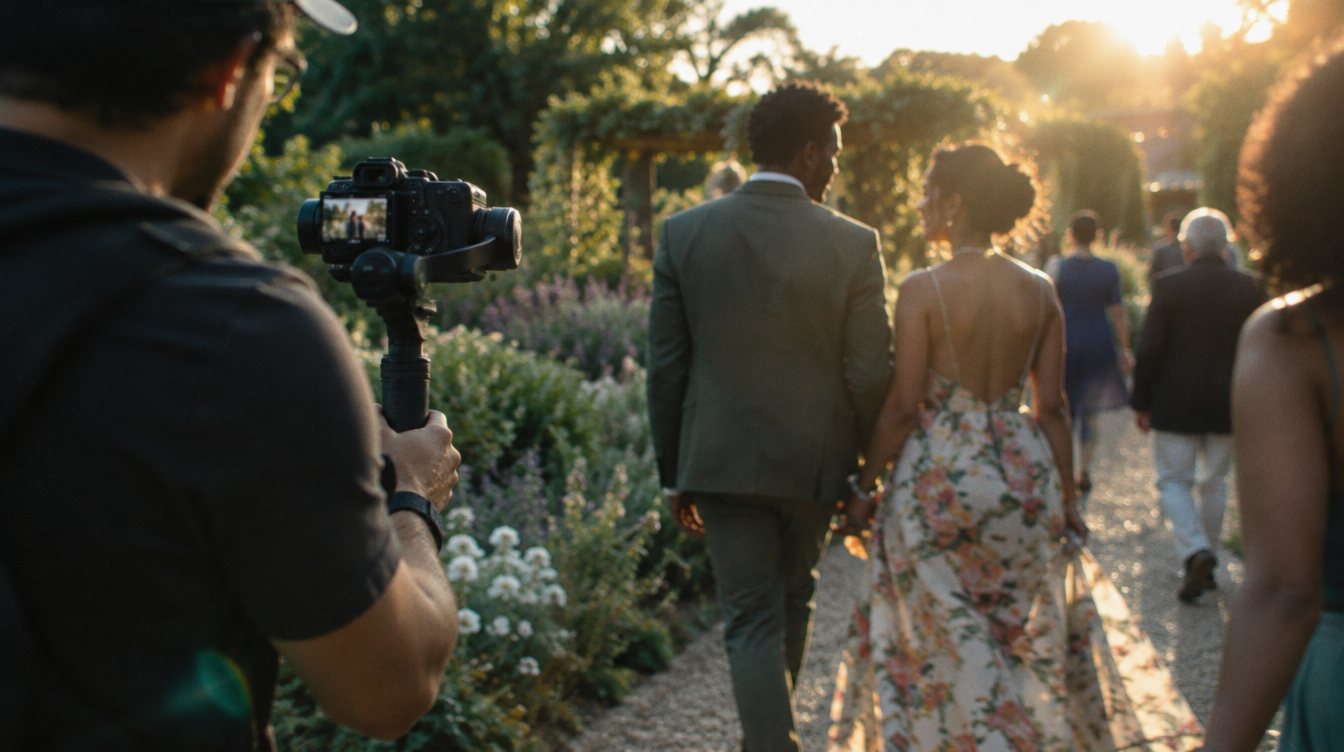
A gimbal turns a walk into a glide: the entrance, the first look, the slow push across a ballroom. But at a ten hour wedding it is also a heavy, battery-hungry object you have to balance, charge and carry. The right pick depends on your total rig weight and on how many shots actually need it.
Prices below are typical US retail from late 2026 research and change often. Check the current version and price before you buy.
Start with payload, not features
Every gimbal has a rated payload. Your number is the camera body plus lens, battery, card, any monitor or wireless receiver, and the mounting plate. Weigh the full rig on a kitchen scale. Then leave headroom: a gimbal running near its limit has to work harder, balances less precisely and drains faster.
For reference, the bodies we shoot on are light. Canon lists the EOS R5 C at about 680 g body only and the EOS C50 at roughly 665 to 670 g. Add an RF L-series zoom and a few accessories and you are typically in 3 kg gimbal territory, not 4.5 kg. Your rig will differ, so weigh it.
The picks
Mid-size camera gimbal
DJI RS 5
Best for: mirrorless and compact cinema cameras with standard zooms.
- Launch price
- Around $569; around $719 for the combo with tracking module and briefcase handle
- Rated payload
- About 3 kg
- Gimbal weight
- About 1.46 kg with grip and plates
- Charging
- About 1 hour with a 65 W PD charger
- Automatic axis locks speed up setup between moments
- Native vertical shooting for social cutdowns
- Fast charging helps on long event days
- No built-in focus motor support like the Pro line's LiDAR
- Still a real arm workout over a full reception
Compact camera gimbal
DJI RS 4 Mini
Best for: lighter mirrorless bodies with small primes, and travel.
- Launch price
- Around $369; around $459 for the combo
- Rated payload
- About 2 kg
- Gimbal weight
- About 890 g
- Battery
- Built in, not swappable
- Light enough to carry all day
- Doubles as a phone gimbal with an adapter
- Too small for most cinema builds with zooms
- Built-in battery means no hot swaps
Heavy-duty camera gimbal
DJI RS 4 Pro
Best for: heavy cinema rigs, follow-focus setups and wireless video builds.
- List price
- Around $869; combos around $1,099
- Rated payload
- About 4.5 kg
- Gimbal weight
- About 1.6 kg
- Extras
- Carbon fiber arms, LiDAR focusing option, wide accessory ecosystem
- Headroom for big lenses and monitors
- Works with sliders, jibs and vehicle mounts
- Overkill and tiring for a typical wedding rig
- Expensive once you add accessories
Smartphone gimbal
DJI Osmo Mobile 8
Best for: a second angle, behind the scenes and vertical social clips on a phone.
- Typical price
- Around $125 to $150
- Fits
- Smartphones
- Cheap way for an assistant to grab extra moving shots
- Light and quick to deploy
- Limited by the phone's low-light performance in dark rooms
Zhiyun also makes capable alternatives, such as the Weebill and Crane lines. Compare current payload ratings and app support before you choose, since model names and specs change often.
Gimbal, monopod or handheld?
Gimbal
- Smooth walking shots, entrances, venue reveals
- Needs balancing, charging and both hands
- Hard to swap lenses quickly
Monopod or handheld
- Speeches, vows, dancing and candid coverage
- Fast to reposition and change lenses
- Pairs well with lens or electronic stabilization
For most event coverage, a monopod and handheld work carry the day, and the gimbal comes out for the shots that need motion. Ceremonies and toasts are mostly static. The gimbal earns its place on the grand entrance, the couple's portrait walk and wide reveals of the room. If you are building out your camera choices too, see the best cameras for event videography.
Pack the gimbal pre-balanced with the lens you plan to use on it, and mark the plate positions with tape. That turns a ten minute balance into a thirty second mount.
A gimbal plan for a wedding day
- Balance and test at home
Charge everything, balance with the chosen lens, mark the plate, and test the follow modes.
- Venue and detail glides
Slow pushes past dresses, rings and the room before guests arrive.
- Processional only
Use it for the walk down the aisle if the venue allows, then switch to a monopod for vows.
- Couple walk and reveals
The most valuable gimbal time of the day.
- Entrance and first dance
Then put it down. Dancing coverage is usually better handheld.
Practice drill: the hallway test
Set up a mark at each end of a hallway. Walk it ten times with the gimbal: forward, backward, orbiting a chair, and rising from low to high. Watch the footage at full size. Look for the step bob (bend your knees and roll heel to toe), drift at the end of a move and horizon tilt. Repeat until three passes in a row are clean. Then try the same walk in low light, which is where event work gets hard; our guide to shooting low light at receptions covers the settings side.
A gimbal makes good movement better. It does not fix a shot you did not plan.
If you would rather hire the coverage than build the kit, see how we approach wedding films and event coverage.
Frequently asked questions
How much payload headroom should I leave?
Aim to keep your full rig comfortably under the rated payload, not at it. A gimbal near its limit balances less precisely, works its motors harder and drains its battery faster.
Do I need a gimbal if my camera has stabilization?
Not for everything. In-body or electronic stabilization handles slow handheld moves. A gimbal is still the better tool for long walking shots and smooth reveals.
Is a smartphone gimbal useful for professional events?
As a secondary tool, yes. It is great for behind the scenes and vertical clips. It will not replace a camera gimbal for main coverage in dark rooms.
How long does a gimbal battery last at an event?
It depends on payload and use. Manufacturers quote best-case standby times. Charge fully, carry a USB-C power bank or spare grip, and power the gimbal down between moments.