The short answer
- Power: a working, grounded outlet near the setup, ideally on a circuit not shared with catering equipment.
- Space and access: a flat area next to the dance floor, a clear load-in path, parking and enough time to set up before guests arrive.
- Rules and people: the venue's sound limits, music end time, insurance requirements and an on-site contact for the day.
Most of what makes a reception sound good is decided before the DJ plays a single song. If the power is wrong, the setup spot is in a corner far from the dance floor, or the DJ finds out about a sound limit at 8 PM, the night suffers. The fix is simple: get the right information from your venue early and pass it to your DJ.
A professional DJ will usually contact the venue directly. Still, it helps to know what they are asking for, so you can spot problems while the floor plan is still flexible.
1. Power
Power is where a lot of venue problems start. Sound systems and lighting draw real current, and a circuit that also runs coffee urns, warming trays or a bar fridge can trip mid-reception.
- A grounded outlet within reach of the setup. Ask how far the nearest outlet is from the DJ spot. Long cable runs across walkways are a trip hazard and need to be taped down or covered.
- A circuit not shared with catering. Ask the venue which outlets are on separate circuits. Most venue managers know.
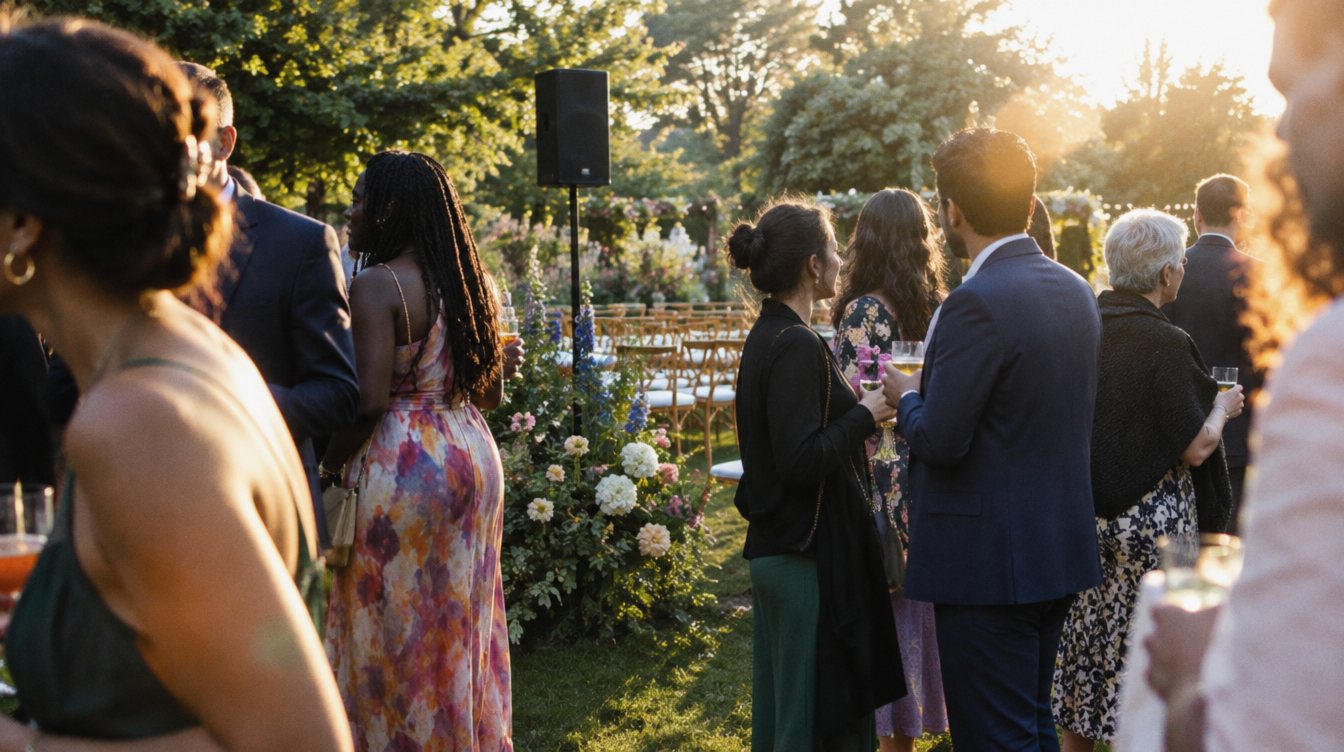
- Power at every location you need sound. If your ceremony is on a lawn or a cliffside spot far from the building, ask whether there is an outlet nearby. If not, your DJ needs to bring battery powered speakers.
- Generator rules. Some sites and public parks restrict or ban generators, or require a permit. Confirm before anyone plans around one.
Ask the venue for its floor plan with outlets marked. If they do not have one, a phone photo of each wall where the DJ might set up is surprisingly useful.
2. Setup space and placement
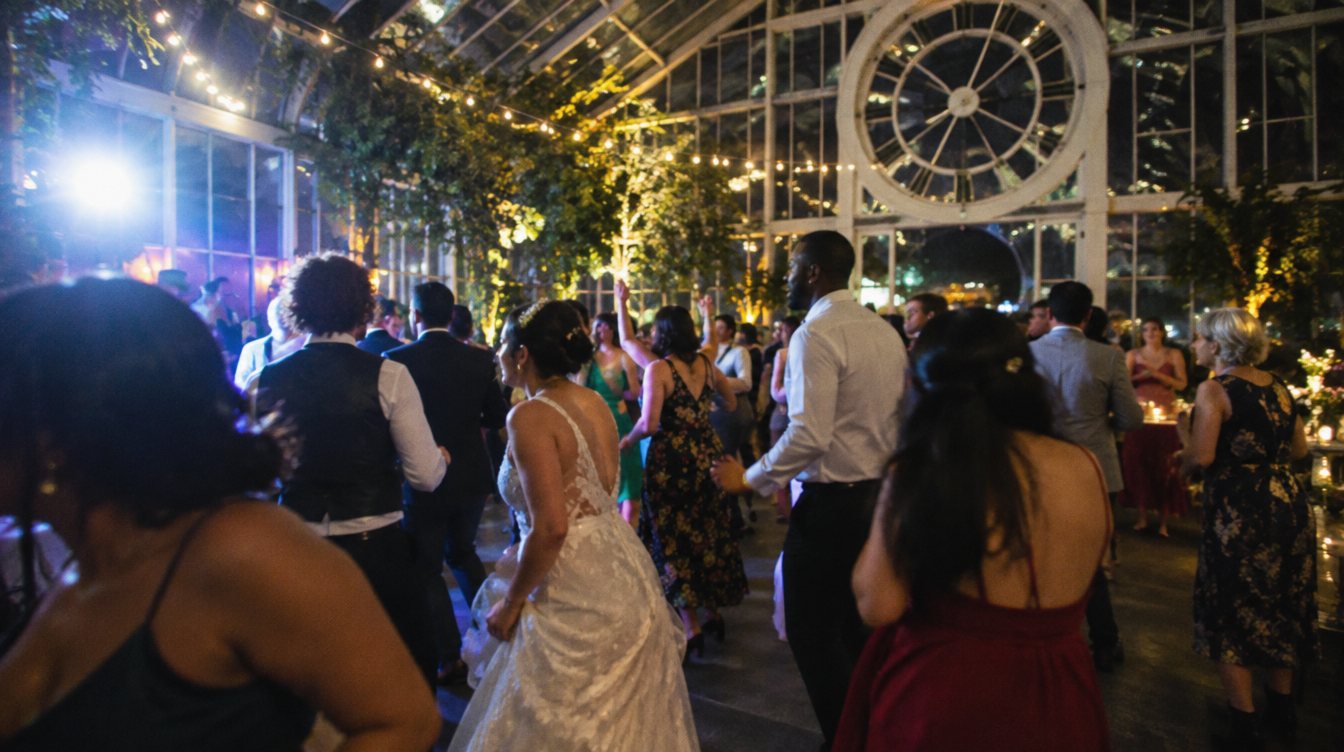
Where the DJ stands affects the whole night. The DJ needs to see the dance floor, the head table and the entrance, and the speakers need to cover the room without blasting the closest dinner tables.
A good DJ spot
- Right next to the dance floor
- Clear view of the entrance and head table
- Flat, stable floor
- Near a grounded outlet
- Out of main walkways and service paths
A problem spot
- In a corner across the room from the dance floor
- Behind a pillar or around a corner
- On grass, gravel or a slope with no flat base
- Next to the kitchen door
- Right beside a table of older guests
Ask your DJ how much floor space their setup needs and whether they bring their own table and facade. Many professional DJs do. If they need a table from the venue, request it in writing with the size.
Outdoors, the DJ also needs shade from direct sun (electronics overheat) and a covered plan if rain or wind shows up. Ask the venue where vendors go if the reception moves indoors.
3. Load-in, parking and timing
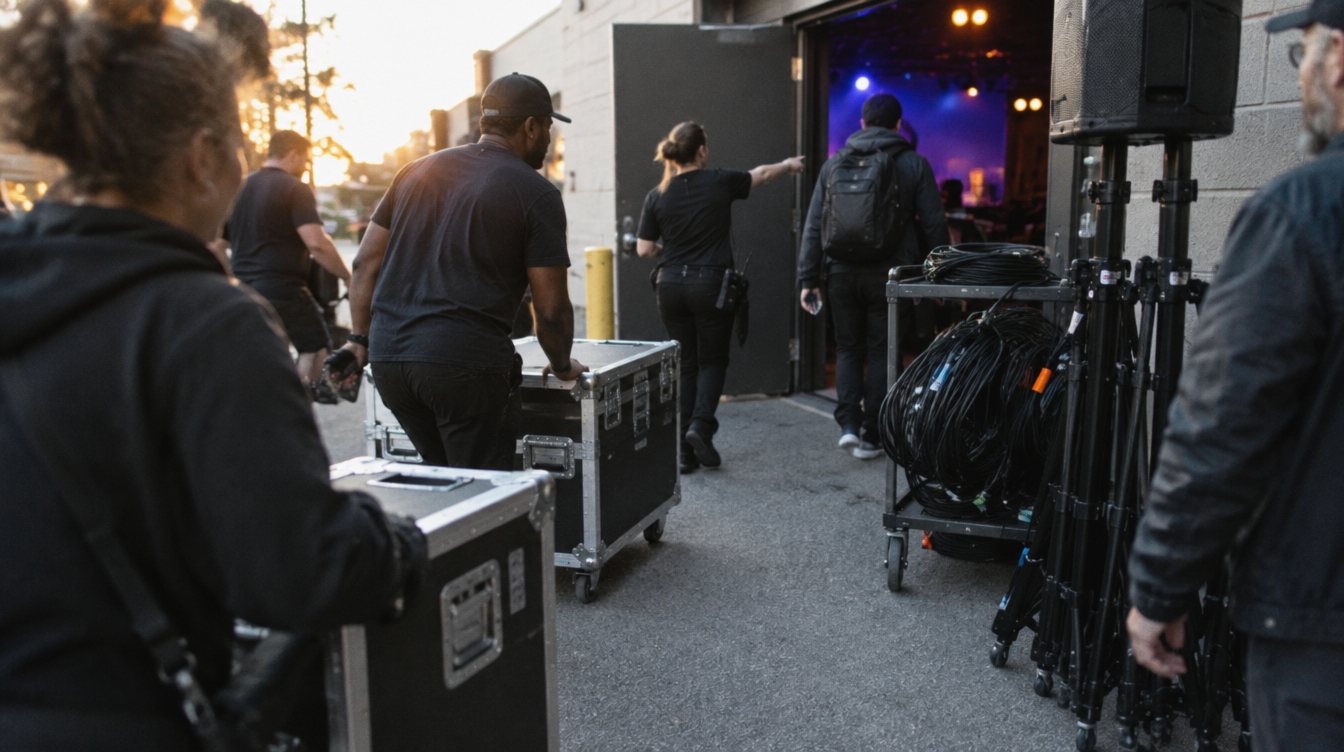
DJs move heavy gear on carts. A great reception space can still be a hard load-in if the only route involves stairs, a long gravel path or a shared freight elevator.
- The vendor loading area and the route from it to the reception space
- Whether there are stairs, elevators or long walks, and the best door to use
- Vendor parking: where it is, and whether it is on site or a shuttle ride away
- The earliest time vendors can arrive and the time everyone must be out
- Whether other vendors (florals, rentals, catering) are loading in at the same time
- Any rules about carts on certain floors or through certain rooms
Setup time matters more than most couples realize. Sound and lighting need to be built and tested before guests walk in, which usually means arriving well before the ceremony or cocktail hour. If the venue gives vendors only a short window, your DJ needs to know now, not on the day.
4. Sound rules, curfews and limits
Many Southern California venues have rules about amplified music, especially outdoor spaces near homes. Wineries, estates and hotels may have a hard music end time, a decibel limit measured at the property line, or a rule that outdoor music ends earlier than indoor music.
| Ask the venue | Why it matters |
|---|---|
| What time must amplified music end? | Your timeline is built backward from this |
| Is there a decibel limit, and where is it measured? | Affects speaker placement and how loud the dance floor can get |
| Is outdoor music allowed, and until when? | May require moving the party inside at a set time |
| Is there an in-house sound system or sound limiter? | Some venues require DJs to plug into house sound or a limiter that cuts power if it gets too loud |
| Are there restrictions on haze, fog or certain lighting? | Haze can set off smoke detectors in many venues |
Ask for these rules in writing and send them to your DJ. Our Temecula winery wedding guide goes deeper on sound limits at wineries, and our guide to outdoor wedding ceremony sound covers mics, power and wind outside.
5. Insurance and vendor paperwork
Many venues require every vendor to carry liability insurance and send a certificate of insurance (COI) naming the venue before the event. Some also have a preferred vendor list, a fee for outside vendors, or a rule that certain AV work must go through the in-house team.
Find out early. It is much easier to sort out vendor rules before you sign with a DJ than after. Every EMP Created wedding package includes insurance, and we send our certificate to your venue on request. Our guide to certificates of insurance explains what venues ask for and why.
6. A contact and a shared timeline
On the day, your DJ needs to know who to talk to when something changes: the kitchen is running late, the toasts are moving, the sun is hitting the speakers. That person is usually your planner or the venue's event manager.
- Name a day-of contact. Give your DJ the name and cell number of your planner or venue coordinator.
- Share one timeline with everyone. The DJ, photographer, caterer and venue should all work from the same run of show. Our sample reception timeline is a good starting point.
- Confirm the floor plan. Send the final layout with the DJ spot, dance floor and head table marked a couple of weeks out.
- Plan the vendor meal. Many DJ contracts include a meal for long days. Tell the caterer where and when vendors eat, ideally during dinner when music is low key.
Get the venue's power, load-in and sound rules in writing, then send them to your DJ. Most day-of problems are really planning problems.
What the venue does not need to provide
A professional DJ should bring the sound system, mics, cables, stands, lighting, music and a backup for the critical pieces. You should not need to rent speakers or ask the venue for microphones unless the venue requires its own house system. If a DJ asks you to supply core equipment, that is worth a question. Ask for a written list of what the package includes.
Frequently asked questions
Should we connect our DJ and venue directly?
Yes. Introduce them by email once both are booked. A DJ who talks to the venue early catches power, load-in and sound limit issues before they become day-of surprises. We coordinate load-in, power and timeline directly with your venue and planner.
Does a DJ need Wi-Fi at the venue?
A well-prepared DJ keeps music stored locally and should not depend on venue Wi-Fi. A connection can help with rare last-minute requests, but it should never be required.
How much space does a DJ setup need?
It depends on the setup and lighting. Ask your DJ for their footprint and share it with the venue so the floor plan includes it.
What if the venue has no outlet near the ceremony site?
Your DJ can use battery powered speakers and wireless mics for the ceremony. Confirm this ahead of time so the right gear comes.