The short answer
- Start with one bright bi-color point-source light (100 to 200 W class) and a large softbox. That single key does most of the work in an interview.
- Add a smaller light for fill or a hair light, and an RGB light to put color in the background.
- Buy for color quality (CRI and TLCI of 95 or higher), quiet fans and battery options, not just raw watts.
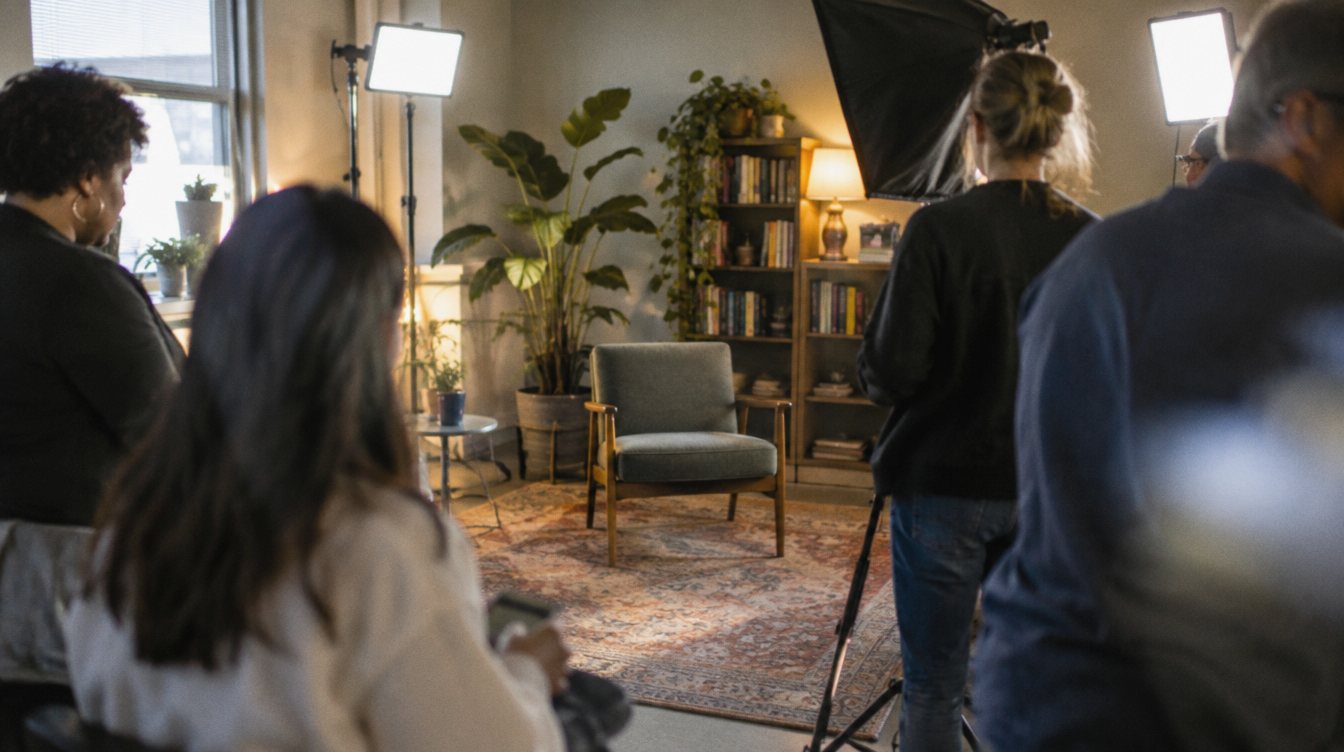
The difference between a home video and a professional interview is usually not the camera. It is a soft, controlled key light and a background that has some shape and color. You can build that look with three lights that fit in one case.
This is a researched buyer's guide. Prices are typical US retail from late 2026 and move constantly, so treat them as a starting point and check the current version of each light before you buy.
What the specs actually mean
| Spec | What it tells you | What to look for |
|---|---|---|
| Bi-color range | How warm to cool the light can go | Roughly 2,700K to 6,500K covers tungsten rooms and daylight windows |
| CRI / TLCI | How accurately skin tones render | 95 or higher on both |
| Mount | What modifiers fit | Bowens mount opens up a huge range of softboxes |
| Power | Where you can use it | AC plus battery (V-mount, NP-F or similar) for location work |
| Fan noise | Whether your lav hears it | Quiet or adjustable fan modes |
| App or DMX control | Adjusting lights without touching them | Handy once the subject is seated and framed |
Watts tell you power draw, not brightness. Compare lux at a set distance with the same reflector, and remember a softbox eats a lot of output.
The picks
Key light
amaran 200x S
Best for: a soft, bright key through a 2 to 3 foot softbox.
- Typical price
- Around $250 to $350
- Output class
- 200 W bi-color point source
- Color temperature
- 2,700K to 6,500K
- Color quality
- CRI 95+, TLCI 98+
- Mount and power
- Bowens; AC or battery via 48 V DC input
- Enough punch to stay soft through diffusion
- App control and built-in effects
- Heavier than small panels; use a solid stand and sandbag
- Battery power needs a larger battery setup
Budget key or fill
Godox SL60IIBi
Best for: a first key light, or a fill light next to a bigger key.
- Typical price
- Around $140 to $170
- Color temperature
- About 2,800K to 6,500K
- Mount
- Bowens
- Power
- AC
- Low cost way to learn soft lighting
- Takes the same Bowens modifiers as bigger lights
- Less output; it struggles through big softboxes
- No battery option, so you need an outlet
Color and accent
Nanlite Forza 60C
Best for: colored backgrounds, hair light and creative accents.
- List price
- Around $550 to $700
- Color
- Full color (RGBLAC), about 1,800K to 20,000K
- Lamp head weight
- About 1.08 kg
- Power
- AC, or NP-F and V-mount batteries with the grip
- Accurate whites plus saturated color in one light
- Small and battery capable for location work
- Not bright enough to be a soft key through a large box
Mini RGB panel
Aputure MC Pro
Best for: practical accents, shelf glows and small spaces.
- Typical price
- Around $160 to $200
- Output
- 5 W RGBWW, 2,000K to 10,000K
- Battery
- Built in, about 2 hours at full output
- Build
- IP65 rated, about 247 g
- Hides behind objects to add depth to a background
- Rugged and easy to stick anywhere
- Small output; it is an accent, not a key
Three starter kits by budget
Typical light cost for a three-light interview kit (lights only, before stands and modifiers)
These ranges are rough sums of the typical prices above on a $3,000 scale. Stands, softboxes, sandbags and batteries can add several hundred dollars more, and they matter just as much.
Stands, modifiers and the small stuff
New buyers spend everything on lights and then fight flimsy stands all day. Budget for the support gear from the start, because it is what makes a setup safe and repeatable.
- A large softbox or lantern for the key. Bigger and closer means softer light on the face.
- Sturdy stands with sandbags. A 200 W light with a softbox is top heavy; never leave it unweighted around clients.
- A grid for the softbox. It keeps light off the background so your accent colors stay rich.
- Black and white foam boards. White fills shadows for free; black removes unwanted bounce.
- Batteries and cables sized for a full shoot, plus a power strip and gaffer tape for every cable run.
How to use them on set
- Kill the room lights first. Overhead fluorescents and mixed window light fight your setup. Turn them off or match them.
- Place the key. Big softbox, about 45 degrees off the subject's face on the side they look toward, slightly above eye level and close in.
- Decide on fill. Often a bounce card or a dimmed second light. Less fill gives more mood.
- Separate the subject. A hair or rim light from behind and to the side lifts them off the background.
- Paint the background. A colored light or a practical lamp adds depth without touching the face.
Our full walkthrough, with diagrams and settings, is in how to light an interview with three lights. For the audio side of the same setup, see the best lav mics for interviews.
Buy the softbox before the second light. Soft light is what makes faces look expensive.
Practice drill: one light, five looks
With just a key light and a softbox, shoot a friend in five positions: straight on, 45 degrees, 90 degrees to the side, behind and to the side, and high above. Keep everything else identical. Then add a white foam board as fill on the open side. You will learn more about shaping a face from this than from any second light purchase.
When the setup needs to look polished on a deadline, that is what our interview and brand video shoots are built for, and you can scope one through plan your project.
Frequently asked questions
How many lights do I need for an interview?
One good key light with a large softbox will carry a simple interview. Three lights (key, fill or hair, and background) give you full control.
Bi-color or full RGB for my first light?
Bi-color for the key. Skin looks best under accurate white light. Add RGB later for backgrounds and accents.
Can I run interview lights on batteries?
Many can, with the right battery plate or grip. Smaller lights run happily on NP-F or V-mount batteries; 200 W class lights need larger batteries and get shorter run times.
Do LED lights cause flicker on camera?
Quality video LEDs are designed to be flicker free at normal settings. Test at your planned frame rate and shutter speed, especially when shooting slow motion.