The short answer
- For most interviews, a compact wireless kit that records a backup inside each transmitter (DJI Mic 3 or RODE Wireless PRO) is the best all-round choice.
- If you want no radio at all, a pocket recorder with a lav, like the Tascam DR-10L Pro, records straight to a card on the subject.
- Pick 32-bit float recording wherever you can. It protects you from clipping when someone laughs or raises their voice.
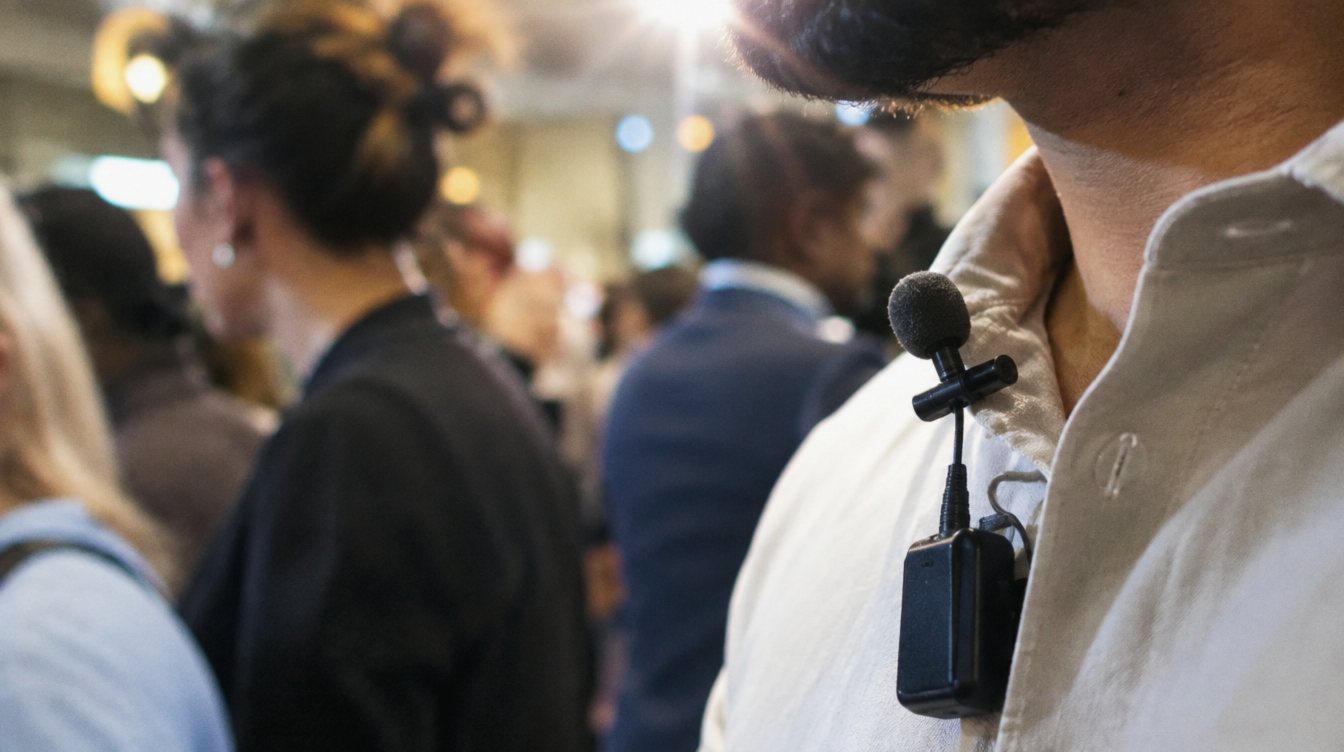
A lavalier mic sits a few inches from the speaker's mouth, which is why it beats almost any camera-mounted mic for sit-down interviews. The hard part is not the capsule. It is getting the signal from the subject to a file safely, with a backup, without the subject noticing the gear.
This guide covers four ways to do that, from a $200-ish wireless kit to a professional lav you will keep for a decade. Prices are typical US retail as of late 2026 and change often, so check current listings before you buy. If you are still learning mic placement and room noise, start with our guide to recording clean interview audio.
What to look for in an interview lav setup
Every option below is judged on the same few things. Use this list when you compare anything not on it.
- Internal backup recording. If the wireless link drops, a copy recorded on the transmitter saves the take.
- 32-bit float. It captures a huge dynamic range, so a sudden laugh does not clip. You still need sensible levels, but mistakes become fixable.
- Timecode. Not required, but it makes syncing several cameras and recorders much faster in the edit.
- A lav you can hide. The clip-on transmitter mics are fine on camera. For a clean, invisible look you want a separate lav that plugs into the transmitter.
- Battery life that covers the shoot. Interviews run long. Plan for a full day plus a charging case or spare power.
The picks
Compact wireless kit
DJI Mic 3
Best for: solo shooters who want small, fast wireless with a recorded backup.
- Launch price
- Around $329 (2 transmitters, 1 receiver); around $219 for 1 and 1
- Backup recording
- On each transmitter, 24-bit or 32-bit float
- Transmitter weight
- About 16 g
- Battery
- Up to about 8 hours per transmitter, more with the charging case
- Timecode
- Yes
- Very small transmitters that disappear on a lapel
- Charging case keeps the kit ready between setups
- Supports up to four transmitters for panel or group interviews
- The clip-on look is visible; plan a separate lav for hidden placement
- Lots of settings to learn before your first real shoot
Compact wireless kit
RODE Wireless PRO
Best for: interview and documentary work where timecode and a safety track matter.
- Typical price
- Around $300 to $400 for the two-person kit, depending on sales
- Backup recording
- 32-bit float on each transmitter, 32 GB storage
- Range
- Rated up to about 260 m line of sight
- Timecode
- Yes
- In the box
- Two RODE Lavalier II mics in the standard kit
- Lavs included, so you can hide the mic from day one
- Safety channel and float backup cover most audio mistakes
- Some advanced settings live in RODE's companion app, not on the device
- Bigger than the newest mini kits
Wireless kits share the 2.4 GHz band with Wi-Fi and phones. At a crowded venue, keep the receiver in line of sight and close to the subject, and always arm the internal backup.
Wired pocket recorder
Tascam DR-10L Pro
Best for: weddings, ceremonies and walk-and-talks where you cannot babysit a receiver.
- Typical price
- Around $150 to $220
- Recording
- 32-bit float to a microSD card
- Mic
- Includes a lav
- Sync
- Timecode support (optional accessory)
- No radio link, so nothing to drop out
- Small enough to hide on an officiant or a groom
- No live monitoring; you hear it only after the fact
- One more file per subject to sync in the edit
Field recorder
Zoom F3
Best for: pairing a boom or wired lav with a backup feed on seated interviews.
- Typical price
- Around $280 to $330
- Inputs
- Two locking XLR/TRS
- Recording
- 32-bit float, dual converters
- Power
- Battery powered
- Lets you record a boom and a lav on separate tracks
- Float recording means no gain knob to fear
- Needs XLR mics, or an adapter for 3.5 mm lavs
- Only two inputs; bigger panels need more
Professional lav capsule
Sanken COS-11D
Best for: the upgrade lav you plug into a wireless transmitter or recorder.
- Typical price
- Roughly $350 to $500, depending on connector
- Pattern
- Omnidirectional
- Connectors
- Sold wired for specific transmitters (Sennheiser, Sony, XLR and others)
- An industry standard for hidden dialogue mics
- Small enough to tape under clothing
- Costs more than many full wireless kits
- Order the right connector for your transmitter
Which setup fits which shoot
| Shoot | Recommended setup | Why |
|---|---|---|
| Seated brand or doc interview | Wireless kit plus boom into a field recorder | Two independent sources; the boom often sounds more natural |
| Run and gun, solo shooter | DJI Mic 3 or RODE Wireless PRO | Fast setup, backup on the subject |
| Wedding ceremony | Pocket recorder on the officiant or groom, plus wireless if possible | No dropouts, no receiver to watch while you film |
| Podcast or panel | Multi-transmitter wireless or wired lavs into a recorder | One track per voice |
Seated interviews like the ones we film for brand and documentary clients almost always deserve two audio sources. A lav catches everything close up; a boom just out of frame catches a more open sound. If one gets rubbed or bumped, the other covers it.
How to place and hide a lav
- Find the sweet spot. Mid-chest, about a hand's width below the chin, centered or on the side the subject turns toward.
- Kill clothing noise. Fabric rubbing on the capsule is the number one lav problem. Use a small loop of cable as strain relief and tape so nothing moves.
- Hide it under a layer if needed. Under a shirt placket or tie works well. Cotton is quieter than synthetic fabric; avoid layering against silk.
- Arm the backup and set levels. Even with 32-bit float, set a sensible level and do a test where the subject says their name and laughs.
- Listen with headphones. Every time. Listen for rustle, hum and the room. You cannot fix in the edit what you never heard.
The best lav is the one you listened to before you hit record.
Practice drill: the 10 minute audio test
Before a paid shoot, run this at home with a friend. Mic them three ways: clip-on visible, hidden under a shirt, and on a boom just out of frame. Record two minutes of conversation in each, including a laugh and a moment where they lean back. Then line the tracks up in your editor and compare. You will quickly learn which placements rub, which rooms echo, and how much your backup track saves you.
When you are ready to light the same setup, our guide to lighting an interview with three lights picks up from here. For handheld mics at receptions and toasts, see the best wireless microphones for events.
Frequently asked questions
Do I need 32-bit float recording for interviews?
You do not need it, but it is the cheapest insurance in audio. It keeps loud moments from clipping, which is the one mistake you cannot repair later. Most current wireless kits and pocket recorders offer it.
Is a clip-on wireless mic good enough for professional work?
For social content and run and gun work, yes, if you watch for clothing rustle. For polished brand or documentary interviews, a hidden lav plus a boom gives a cleaner, more natural result.
Can I plug any lav into any wireless transmitter?
No. Connectors and power differ. Many compact kits use 3.5 mm inputs, while pro lavs are sold wired for specific transmitter brands. Check compatibility before you order.
Should I record audio in camera or on a separate recorder?
Both. Send the wireless receiver into the camera for an easy sync track, and keep the transmitter's internal recording as the master backup.