The short answer
- For toasts and announcements through a PA, a digital handheld system is the sweet spot: the Shure SLXD24/SM58 or Sennheiser EW-D (around $430 to $700), or the Shure GLXD24+ (around $580 to $660) if you want license-free 2.4 and 5.8 GHz bands.
- On a tight budget, the analog Shure BLX24/SM58 (around $350 to $390) is a dependable first mic.
- To record vows for video, add a lav kit with onboard 32-bit float backup, like the RODE Wireless PRO (around $400) or DJI Mic 3 (around $220 to $260). In the US, never buy used gear that runs in the 600 MHz band.
Wireless mics carry the moments people remember: vows, toasts, the first dance introduction. Our founder, Ceasare Orlando, has run the mic at weddings, private and corporate events since 2010. This guide is researched from manufacturer information and retailer listings, not hands-on testing of each system. Prices are typical US prices in late 2026, they vary by frequency band, and they change often.
Two jobs, two kinds of wireless
Event wireless does two different jobs, and the gear for each is different.
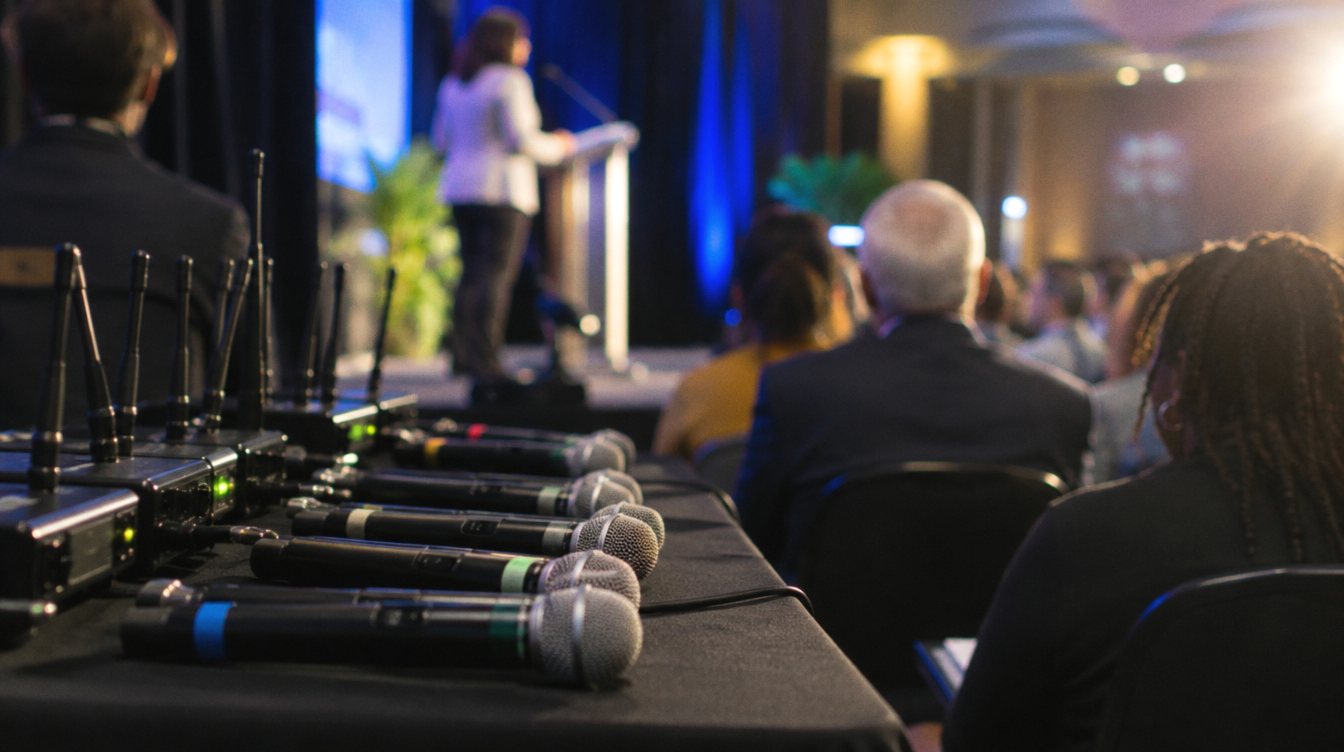
Live sound (PA) systems
- Handhelds and bodypacks that feed your mixer and speakers
- Built for low latency and reliable range in a full room
- Examples: Shure BLX, SLXD, GLXD+, Sennheiser EW-D
- What guests hear in the room
Camera and recording kits
- Small clip-on transmitters built for video
- Record a backup inside the transmitter
- Examples: RODE Wireless PRO, DJI Mic 3
- What ends up in the wedding film
A well-run wedding often uses both: a handheld for toasts going to the speakers, and a recording lav on the officiant or groom for the film. Our guide to outdoor wedding ceremony sound covers placement and wind.
Know the frequency rules first
The FCC repurposed the 600 MHz band, and wireless mics operating there had to stop by July 13, 2020. Many cheap used systems still sit in those ranges. Before buying anything used, check the frequency printed on the receiver. Unlicensed systems can also use other bands, including 2.4 GHz, which is why systems like the Shure GLXD+ avoid TV-band coordination altogether.
When buying a UHF system, the same model is sold in different frequency bands with different prices. Pick the band that works in your area, not just the cheapest listing.
The picks: handheld systems for toasts and MC work
Analog UHF handheld
Shure BLX24/SM58
Best for: new DJs who need one reliable wireless mic for toasts.
- Type
- Analog UHF
- Capsule
- SM58
- Price
- Around $350 to $390 (list $489)
- Familiar SM58 sound
- Simple setup
- Low cost
- Analog, fewer features than digital systems
- Band choice matters for your area
Digital UHF handheld
Shure SLXD24/SM58
Best for: working DJs and MCs who want a pro digital system.
- Type
- Digital UHF
- Capsule
- SM58
- Price
- Around $430 to $700 single, depending on band
- Digital audio with a clean signal
- Dual-receiver versions for two mics
- Familiar SM58 handling for toast-givers
- Price varies a lot by band
Dual-band digital handheld
Shure GLXD24+/SM58
Best for: DJs who travel between venues and do not want to coordinate TV-band frequencies.
- Bands
- 2.4 GHz and 5.8 GHz
- Capsule
- SM58
- Price
- Around $580 to $660
- License-free bands
- Avoids TV-band frequency planning
- Rechargeable system
- 2.4 GHz is shared with Wi-Fi, so crowded venues need care
Digital UHF handheld
Sennheiser EW-D SKM-S Base Set
Best for: DJs who prefer Sennheiser and app-based setup.
- Type
- Digital UHF
- Example band
- R4-9 (552 to 607.8 MHz)
- Price
- Around $600
- Digital system from a major brand
- Band sits below the 600 MHz cutoff
- Base set includes the transmitter and receiver only, so choose a capsule
The picks: lav kits for recording vows
| Kit | Onboard backup | Extras | Around |
|---|---|---|---|
| RODE Wireless PRO | 32-bit float, 40+ hours on 32GB | Internal timecode, up to 260 m line of sight | $400 |
| DJI Mic 3 | 32-bit float, 32GB per transmitter | Up to four transmitters, adaptive gain | $220 to $260 |
32-bit float recording means the backup inside the transmitter is very hard to clip, even if the officiant suddenly shouts. For a wedding film, that backup is the safety net. Our guide to recording clean audio covers lav placement. These kits are built for cameras. If you also need the officiant heard through the speakers, use a PA bodypack system or a separate handheld for the room.
Every wireless mic should have a backup: a second mic, fresh batteries, or a recorder that keeps rolling.
A mic check routine before every event
- Scan and set frequencies at the venue
Use the receiver's scan feature before guests arrive. Venues, bands and AV teams may already be using nearby frequencies.
- Fresh or fully charged batteries
Start every event with full power in every transmitter, plus spares in your pocket.
- Walk the room
Talk into each mic from where toasts and vows will actually happen, and listen for dropouts and feedback.
- Label everything
Tag each mic and channel so you never mute the wrong one during a toast.
- Brief the speakers
Show each toast-giver how to hold the mic a few inches from their mouth. Our guide to how to MC a wedding covers this.
- At least two handhelds for toasts and a spare
- A lav for the officiant
- Windscreens for outdoor ceremonies
- Spare batteries and charging cables
- XLR cables to the mixer
Every one of our wedding packages is a DJ and MC package, so a host who knows how to run the mic comes with it. To pair your mics with the right speakers, see our guide to the best PA speakers for mobile DJs.
Frequently asked questions
What wireless mic do most wedding DJs use?
Many use Shure or Sennheiser handheld systems with an SM58-style capsule, plus a lav for the officiant. Digital UHF and dual-band 2.4 and 5.8 GHz systems are common choices.
Can I use an old wireless mic in the 600 MHz band?
No. In the US, wireless mics in the 617 to 652 MHz and 663 to 698 MHz ranges had to stop operating by July 13, 2020.
Is a camera lav kit enough for a wedding ceremony?
It is great for recording vows for the film, but guests in the room need a PA mic too. Many ceremonies use both.
Are 2.4 GHz wireless mics reliable at events?
They can be, but 2.4 GHz is shared with Wi-Fi. Scan at the venue and keep the receiver in clear line of sight to the mics.