The short answer
- A wedding MC guides the room through the reception: entrances, toasts, first dance, cake, last dance. The job is clarity, not comedy.
- Script every announcement, confirm every name's pronunciation, and run each cue past the coordinator and photographer before you say it.
- On the mic: hold it close and steady, speak slower than feels natural, and say less. Ten clear seconds beat a minute of filler.
Most new wedding DJs worry about mixing. Couples worry about the mic. A clumsy announcement, a mispronounced name or a toast nobody can hear is what guests remember. The good news: MC work is mostly preparation, and preparation is something you control completely.
What a wedding MC actually does
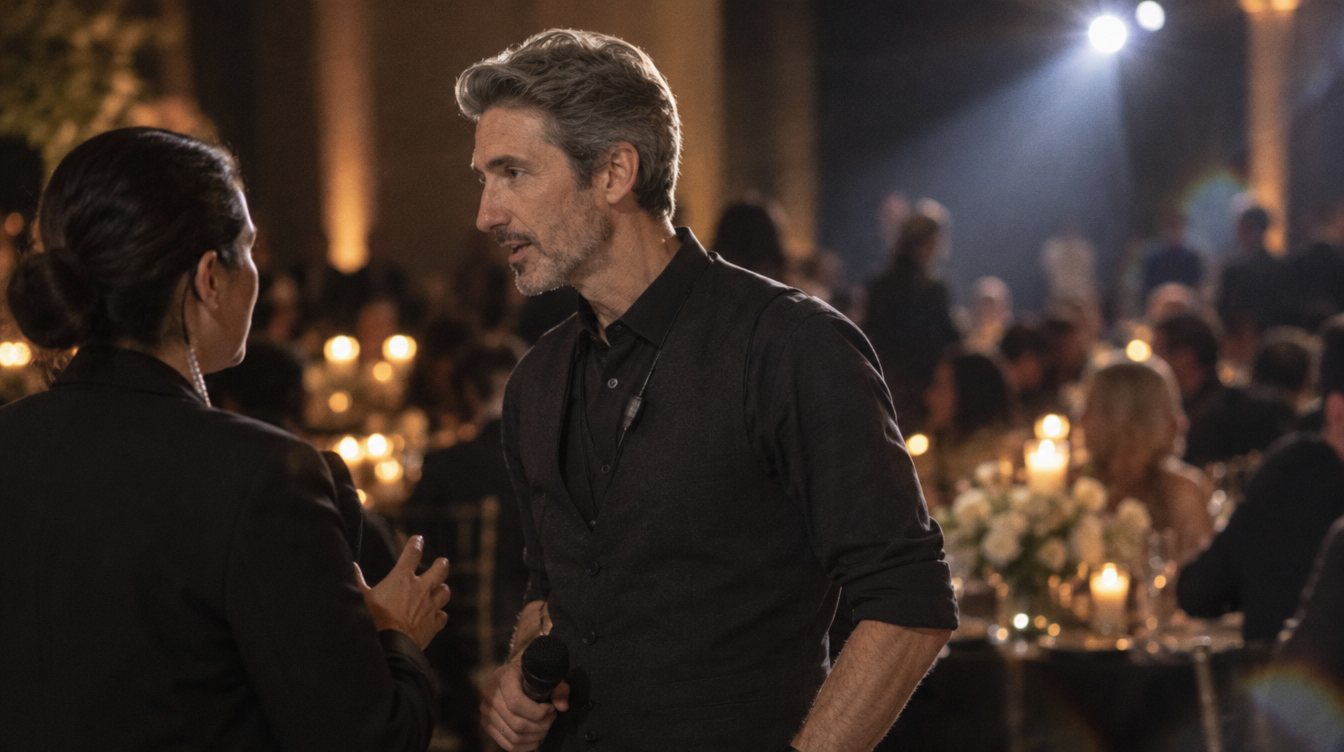
The MC is the voice of the reception. You tell guests what is happening and when, so they never feel lost, and you make sure the photographer, videographer and kitchen are ready before each moment starts. For the client side of this role, see what does a wedding MC do.
A good MC is warm, clear and brief. Think of yourself as a calm host, not a hype man, unless the couple specifically wants high energy.
The announcements you will make
Every wedding is different, but most receptions follow a version of this flow. The times below are an example only; your real times come from the couple and the planner. Our wedding reception timeline post covers how to build one.
- Cocktail hour wrap
Invite guests to find their seats in the reception space. Repeat it once, a few minutes later.
- Grand entrance
Introduce the wedding party and the couple, by name, with music cued for each.
- Welcome and blessing
Hand the mic to whoever is giving the welcome or blessing, then cue dinner.
- Toasts
Introduce each speaker by name and relationship. Have their mic ready and tested.
- First dance and parent dances
Bring the couple to the floor, then invite parents, then open the floor to everyone.
- Cake cutting
Gather guests and photographers, keep it short, then back to dancing.
- Last dance
Announce the last song, invite everyone to the floor, and close the night warmly.
Prepare like a professional
Most mic mistakes are really preparation mistakes. Build these into every wedding.
- A written script for every announcement, printed or on a tablet, in large type
- Every name spelled phonetically, confirmed with the couple out loud (not just by email)
- Wedding party order and pairings for the entrance
- Toast speakers, in order, with their relationship to the couple
- Songs for every cue, cued and checked
- Agreement on what not to announce: no garter toss, no surprise games, no jokes about exes
- Phone numbers for the coordinator and photographer
- Fresh batteries in every wireless mic, plus spares
Call the couple and have them say every name in the entrance aloud while you write it phonetically. "Siobhan" written as "shi-VAWN" on your script is the kind of note that prevents a mortifying moment.
Mic technique
A wireless handheld is your main tool. A few habits make a big difference.
- Hold it close and steady
Keep the mic a few inches from your mouth, pointed at it, and keep that distance the same. Moving it around makes your volume jump.
- Do not cup the head
Holding the grille changes the sound and invites feedback. Hold the handle.
- Stay behind the speakers
Walking in front of a speaker with a live mic is the fastest way to cause a squeal.
- Turn the music down, then talk
Lower the music under your voice, speak, then bring it back. Never shout over a full-volume track.
- Slow down
Nerves speed you up and big rooms echo. Speak slower than feels natural and pause between sentences.
- Smile while you speak
It sounds corny, but people can hear it. It warms your tone.
The best wedding announcement is clear, warm and over before anyone checks their phone.
Writing announcements that work
Good announcements follow a simple pattern: get attention, say what is happening, tell guests what to do. For example: "Ladies and gentlemen, if I could have your attention. In just a moment, the newlyweds will share their first dance. Please find a spot where you can see the dance floor."
Avoid
- "Is this thing on?"
- Inside jokes the room will not get
- Long speeches about love
- Asking guests to "make some noise" over and over
- Improvising names
Do
- Start with a clear attention line
- Say who, what and what guests should do
- Use names exactly as scripted
- Let the couple and speakers be the stars
- Hand back to the music quickly
Handling toasts
Toasts are where things most often go sideways. Before the toasts, meet each speaker, show them how to hold the mic and where to stand, and tell them you will be nearby. Turn the music off completely during toasts. If a speaker drifts too far from the mic, step in quietly and guide their hand back up. If a toast runs long, let the coordinator and couple decide whether to step in; it is their call, not yours.
When something goes wrong on the mic
Even with good preparation, things slip. A name gets mispronounced, a speaker is not in the room yet, or the photographer is outside when you are about to call the first dance. The fix is the same every time: stay calm, keep it short and move on.
- Mispronounced a name? Correct it once, warmly, and continue. Do not make a joke of it.
- Mic cuts out? Switch to the backup mic, already tested and within reach.
- Key person missing? Fill with music, not talk, until the coordinator gives the go.
- Lost your place? Look at your script. Pausing for two seconds sounds far better than guessing.
Practice drills
- Record yourself reading a full entrance script. Listen for speed, filler words and mispronunciations.
- Read in a large room if you can, to hear how echo changes your timing.
- Do a name drill: practice 20 unfamiliar names from phonetic spelling until you can say each smoothly on the first try.
- Time your announcements. Most should be under 20 seconds.
Mic work is one of the biggest steps between playing parties and running weddings. If you are working toward that, read how to become a wedding DJ next.
Frequently asked questions
Do I need to be funny to MC a wedding?
No. Clarity and warmth matter far more than jokes. Humor that fits the couple can help, but most couples prefer a host who keeps things moving smoothly.
Should the DJ or a friend MC the wedding?
Either can work. A DJ MC knows the timeline and controls the music cues, which makes transitions smoother. Some couples have a friend do the welcome while the DJ handles the rest.
What microphone is best for wedding toasts?
A reliable wireless handheld with fresh batteries is the standard. Bring a backup mic and test both before guests arrive.
How do I prevent microphone feedback?
Keep the mic behind the speakers, avoid cupping the grille, keep the mic volume at a sensible level, and test in the room before the event.