
The short answer
- Tipping wedding vendors is a thank-you, not a requirement. Tip for great service, not out of obligation.
- Typical ranges: $50 to $200 per DJ, photographer or videographer; 15 to 25% for hair and makeup; $20 to $50 per server when no service charge is included.
- Read every contract first. Many caterers and venues already add a service charge or gratuity, and you do not need to tip twice.
Wedding tipping confuses almost everyone, because nobody tells you the rules until the week of the wedding. The good news is that there are no hard rules. Tips are a way to thank people who went beyond what you paid for. The guidelines below help you set a budget and prepare envelopes so nobody gets forgotten on a busy night.
How much couples usually spend on tips
Wedding industry surveys put total vendor tips for a typical wedding somewhere around $500 to $2,000, depending on guest count, how many vendors you hire and whether gratuity is already built into your catering contract. Here is how that tends to break down per person or per vendor, based on our research into published etiquette guides and couple surveys.
Typical tips by vendor
These are typical ranges, not a bill. Adjust up for vendors who solved problems or went far beyond the contract, and down (or to a thank-you note) for vendors whose service was simply fine.
| Vendor | Typical tip | Notes |
|---|---|---|
| Catering staff and servers | $20 to $50 per server, or $100 to $200 for the captain | Skip if your contract already includes a service charge or gratuity |
| Bartenders | $50 to $100 per bartender | Often covered by a service charge; ask whether tip jars are allowed |
| Planner or day-of coordinator | $100 to $500 | Optional for owners; common for assistants who worked the day |
| DJ | $50 to $200 per DJ | Add a smaller amount for an assistant or lighting tech |
| Live musicians | $25 to $50 per musician | Ceremony musicians included |
| Photographer and videographer | $50 to $200 per shooter | Second shooters and assistants are often tipped even when the owner is not |
| Hair and makeup | 15 to 25% of the service | Tip each artist, not just the lead |
| Officiant | $50 to $100, or a donation | For clergy, a donation to the house of worship is common |
| Drivers and transportation | 15 to 20% of the bill | Check whether gratuity is already on the invoice |
| Delivery and setup crews | $10 to $25 per person | Florist, rentals and cake deliveries |
Before you prepare a single envelope, search each contract for the words "service charge," "gratuity" or "staff fee." If it is there, that vendor's staff is already covered, and anything extra is purely your choice.
Do you tip the owner of a business?
This is the question etiquette guides disagree on most. The traditional view is that you do not tip business owners, because they set their own prices. The more common modern view is that a tip is a thank-you, and anyone can receive a thank-you. Many small wedding businesses are run by the owner, who is also the person working your wedding all night.
A simple way to decide: tip the people whose work you watched and appreciated, owners included, if the service was exceptional. If you would rather not, a written review does as much for a small business as cash. More on that below.
Our prices are published and complete. Your package already pays for the work, and tipping your EMP Created DJ is entirely up to you.
Gratuity vs. service charge: they are not the same
Couples often assume a service charge on a catering or venue invoice is a tip for the staff. Sometimes it is. Sometimes part or all of it goes to the house to cover operating costs. The wording matters.
"Service charge" or "admin fee"
- May go to the venue or caterer, not the staff
- Often a percentage of food and beverage
- Ask: "How much of this goes to the staff working our event?"
"Gratuity" or "staff gratuity"
- Intended for the staff who work your event
- Usually means you do not need to tip servers again
- A little extra for a standout captain is still a nice gesture
If the answer is unclear, ask the venue or caterer in writing. It is a normal question, and they get it all the time.
When and how to hand out tips
The worst time to figure out tips is at 11 PM when vendors are loading out. Prepare everything ahead and hand it off to someone you trust.
- Set a tip budget early. Add a tip line to your wedding budget when you set it, so it is not a surprise expense in the final week.
- List every vendor and every person. Include assistants, second shooters and each hair and makeup artist. Get the headcount from each vendor a couple of weeks out.
- Prepare labeled envelopes. Cash or a check in an envelope with the vendor's name, plus a short thank-you note. Some vendors also accept digital payment apps, but cash in an envelope is the easiest to hand off.
- Assign a point person. Your planner, a parent or a trusted member of the wedding party should carry the envelopes and hand them out. You should not be tracking cash on your wedding day.
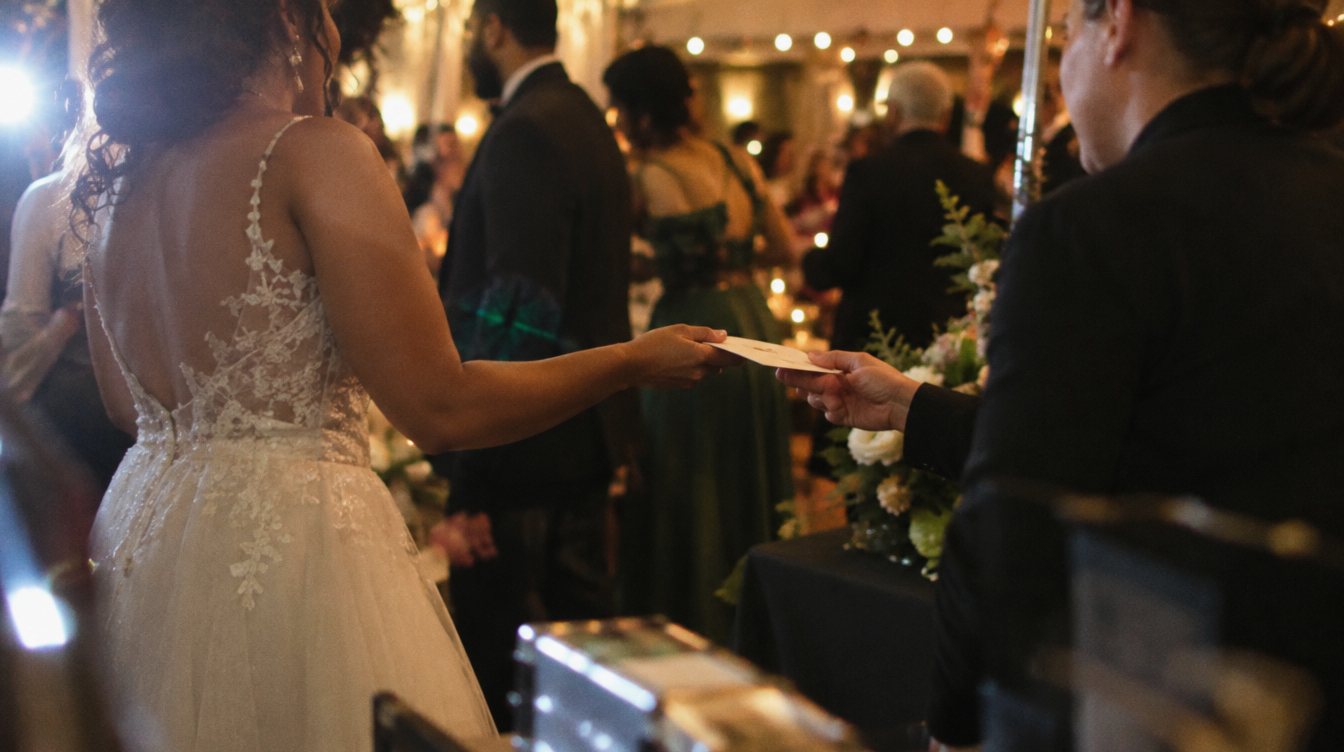
- Hand out tips when the work is done. Hair and makeup are tipped when they finish in the morning. Officiants after the ceremony. DJs, photographers and catering at the end of the night or as they wrap.
- Tip budget added to the wedding budget
- Contracts checked for service charge or gratuity
- Headcount confirmed for each vendor team
- Envelopes labeled and filled the week of the wedding
- Point person chosen and briefed on who gets what and when
- A few spare envelopes for anyone you forgot
Thank-yous that do not cost money
For small wedding businesses, a tip is nice, but a detailed online review often matters more. Reviews are how future couples find and trust vendors, and a specific one that mentions how the vendor helped you is worth more than a one-line rating.
A specific, honest review can do more for a small wedding business than an envelope. Write one within a few weeks, while the details are fresh.
Other free thank-yous that vendors genuinely appreciate: referrals to engaged friends, tagging them when you share photos (with their permission), and a short note telling them what made the day better.
What about feeding your vendors?
Tipping and vendor meals are separate questions. Many vendor contracts require a meal for crew working long days, regardless of tips. See our guide to vendor meals for how that usually works, and check your DJ contract as part of your questions to ask a wedding DJ. If you are still budgeting, our wedding DJ cost guide covers what the base price should already include, and our wedding packages list everything that comes with ours.
Frequently asked questions
Is it rude not to tip wedding vendors?
No. Tips are optional, and vendors price their services to cover the work. Tipping is a way to thank someone for exceptional service, not a hidden fee.
Should we tip the DJ if the DJ is the owner?
It is your call. Traditional etiquette says owners are not tipped. Many couples tip anyway when the DJ ran a great night, and a detailed review is a strong alternative.
Do we tip vendors before or after the wedding?
Usually on the day, when each vendor finishes. Some couples mail a check or send a digital tip afterward, which is also fine, especially for photographers and videographers who deliver weeks later.
Do we need to tip if the contract has a service charge?
Not necessarily. Ask how much of the service charge goes to staff. If it is a true staff gratuity, extra tips are optional.