The short answer
- Learn the craft first: smooth mixing, a deep library of music people of every age know, and confident mic work.
- Get real reps before you sell yourself. Assist or second-shoot for a working wedding DJ, play friends' parties, and record everything.
- Then set up the business side: reliable gear with backups, liability insurance, a simple contract, and clear packages.
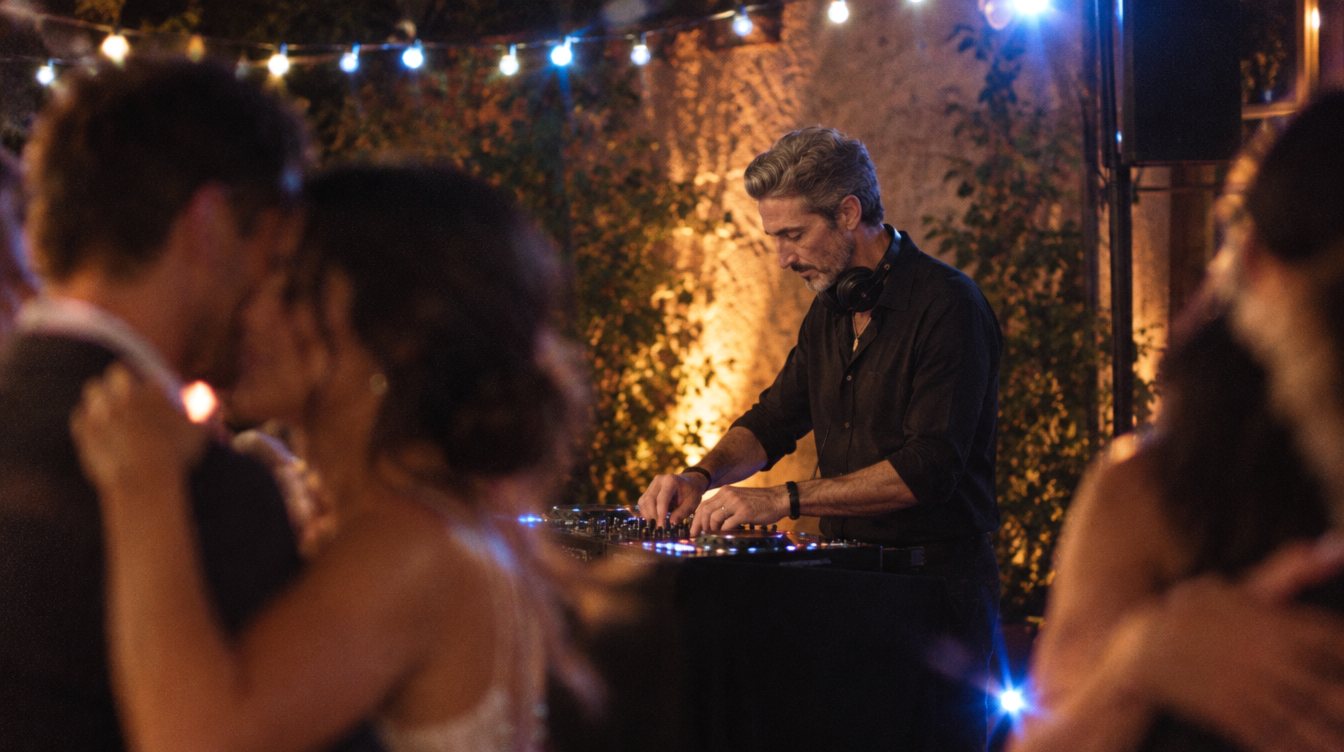
Becoming a wedding DJ is less about tricks on the decks and more about trust. A couple is handing you the most photographed, most emotional night of their lives, plus a room full of grandparents, coworkers and college friends who all want different things. The skills that earn that trust can be learned, in roughly this order.
Our founder, Ceasare Orlando, has DJed weddings, private and corporate events since 2010. What follows is the path he would give anyone starting today, without the shortcuts that tend to backfire.
Wedding DJ vs club DJ: know the job
A lot of new DJs come from the club or bedroom-mix world and assume weddings are the same job with a nicer dress code. They are not. Club sets reward a consistent sound and creative mixing. Weddings reward range, timing and people skills.
Club or bar DJ
- Crowd chose the venue for the music
- One genre or a narrow lane
- Rarely on the mic
- Long, creative blends
- The DJ is the main event
Wedding DJ
- Guests range from 8 to 88 years old
- Many genres, decades and cultures in one night
- MC for entrances, toasts, dances and cues
- Clean, quick transitions that keep momentum
- The couple is the main event; you run the room
If the right column sounds exciting rather than stressful, you are in the right place.
The path, step by step
- Learn to mix cleanly
Pick one DJ software and a starter controller and learn the basics: phrasing, EQ, gain staging and beatmatching. Our guide to how to beatmatch has drills you can do in 20 minutes a day. Aim for transitions nobody notices, not flashy ones.
- Build a wedding library
Weddings need the songs everyone knows: Motown, disco, 80s, 90s and 2000s hits, current pop, hip-hop, Latin, line dances and slow songs. Organize by energy and era, not just genre, so you can find the right song in seconds.
- Practice the microphone
Record yourself announcing a grand entrance, a toast introduction and a last call. Listen back. Most beginners talk too fast and too much. Our post on how to MC a wedding walks through the scripts.
- Get real reps
Play birthday parties, backyard events and friends' gatherings. Offer to carry gear and assist a working wedding DJ. Watching a full wedding from setup to strike teaches more than a month of tutorials.
- Assemble reliable gear
You will need a controller or mixer, a laptop, two powered speakers, a wireless mic, cables and a backup for each critical piece. See DJ equipment for beginners for what to buy first.
- Set up the business
Get general liability insurance, because many venues require a certificate before you can load in. Write a simple contract that covers hours, deposit, overtime and cancellation. Decide on two or three clear packages.
- Book your first couples
Start with people who have seen you play. Post video of you working a room, not just photos of your setup. Ask happy party hosts to tell their engaged friends about you.
The skills that matter most
Mixing is the price of entry. What separates a wedding DJ who gets referrals from one who does not is everything around the mixing.
Reading the room
You have to see who is dancing, who is watching and who is about to leave, then adjust before the floor empties. This is a skill you build by paying attention at every event you play. We cover it in how to read a dance floor.
Running the timeline
The DJ is often the person who keeps the reception on schedule. You coordinate with the planner, photographer, videographer and kitchen so dinner, toasts, first dance and cake cutting happen when they should, and nobody misses the moment because they were in the restroom.
Staying calm under pressure
Things will go wrong: a toast runs long, the venue cuts power to an outlet, a song request clashes with the couple's do-not-play list. Your job is to fix it without the room ever knowing.
The best wedding DJs are invisible when things go wrong and obvious only when things go right.
What to have before your first paid wedding
- At least a few hours of practiced, clean transitions across many genres
- A library organized by energy, era and moment (ceremony, cocktail, dinner, dancing)
- A backup music source and a backup laptop or device
- Two wireless microphones and spare batteries
- General liability insurance and the ability to send a certificate to a venue
- A written contract with hours, deposit, overtime and cancellation terms
- A planning questionnaire for the couple: must-plays, do-not-plays, names and pronunciations
- Black clothing that fits the dress code and does not distract
Before your first wedding, do a full dress rehearsal at home: set up every piece of gear, run a two-hour mock reception with announcements, then tear down and time yourself. You will find the missing cable before a couple does.
How long it takes
There is no fixed timeline, and anyone who promises one is selling something. People with a music background often mix confidently within a few months of steady practice. The mic, the timeline and reading mixed crowds take longer, because they only improve with real events. Plan on playing a good number of smaller parties and assisting at several weddings before you lead one on your own.
Ceasare came to DJing after years of dance and music training (he started studying music at age 5 and was teaching dance at 13), and he still credits live events, not practice sessions, with teaching him the most. There is no substitute for a room full of real people.
What pricing looks like once you are established
Starting prices for new DJs vary widely by market and experience. For a sense of where professional wedding DJ packages land in Southern California, our own published packages start at $2,500 for a four-hour reception and $3,800 for a six-hour full wedding with separate ceremony, cocktail and reception sound. Our guide to pricing your DJ services covers how to get there from your first gigs.
Frequently asked questions
Do I need to be a musician to become a wedding DJ?
No. A sense of rhythm and a love of music help a lot, but many great wedding DJs never played an instrument. What you do need is a deep knowledge of songs people love and the discipline to practice.
What DJ software should a beginner learn?
Serato, rekordbox and VirtualDJ are all used at weddings. Pick the one that works with your controller and learn it well. Our founder uses Serato DJ.
Do wedding DJs need insurance?
Most professional venues ask vendors for a certificate of insurance before load-in, so plan on carrying general liability coverage before you book weddings.
Where do wedding DJs get their music?
Most working DJs use a paid record pool, which provides clean edits, intros and DJ-friendly versions. A pool subscription is one of the first business expenses worth paying for.
Should I start with weddings or other events?
Start with smaller parties and assisting a working wedding DJ. Weddings have no do-overs, so get your reps where the stakes are lower first.