The short answer
- A good school dance DJ plays clean edits only, follows a written content policy from the school, and works with chaperones on volume, safety and timing.
- Book 3 to 6 months ahead for prom season, and get insurance, setup times and any district vendor requirements settled early.
- Students should help shape the music, but the school sets the rules. The DJ's job is to make both true at once.
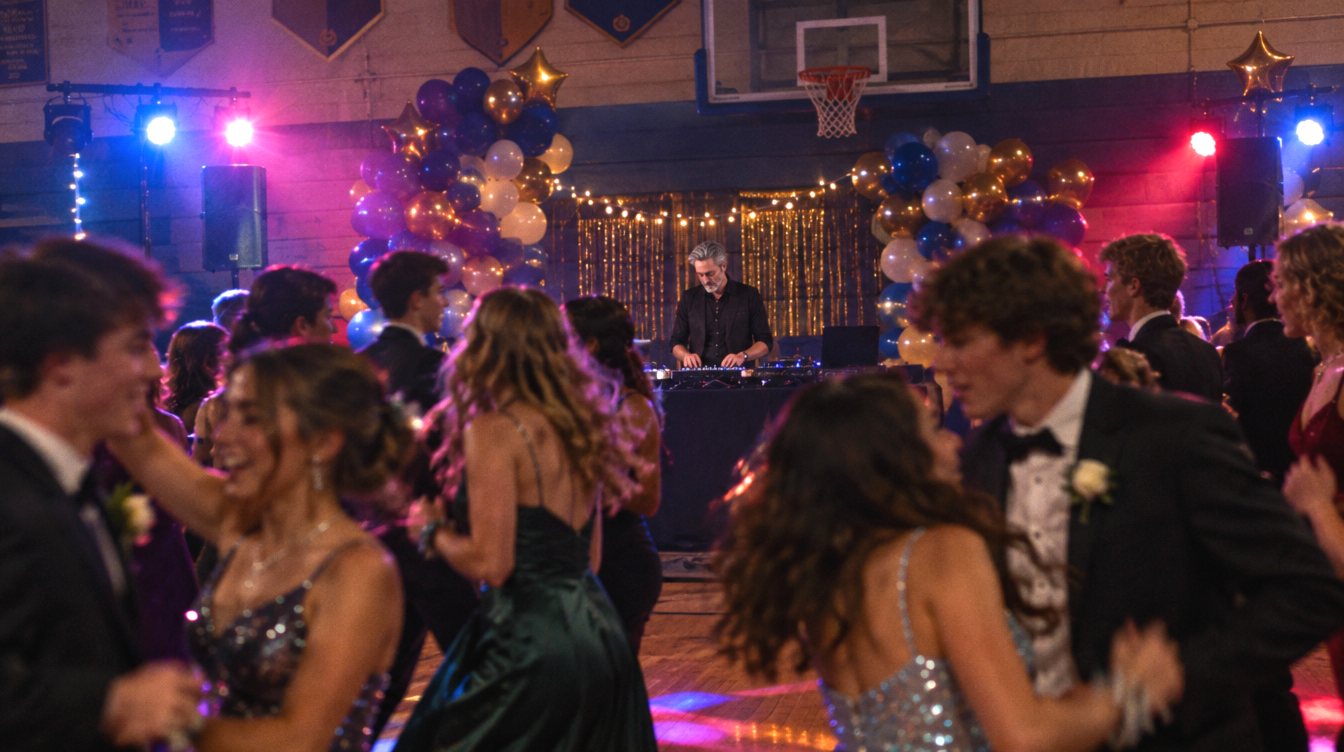
A prom or school dance is a different job from a wedding or a club night. The crowd is young, the rules are stricter, the adults in the room are responsible for everyone's safety, and the students still expect it to feel like the best night of the year. The right DJ handles all of that without anyone noticing the effort.
Our founder, Ceasare Orlando, has DJed many proms and school dances across the Coachella Valley since 2010. This guide shares what schools, activities directors and parent committees should know before booking.
What makes a school dance different
At a wedding, the couple sets the tone and the guests range from kids to grandparents. At a school dance, almost everyone is the same age, they know exactly what is popular this month, and they will tell you immediately if the music misses. At the same time, the school is accountable to parents and the district for everything that is played and said.
What students want
- The songs they are listening to right now
- Big singalong moments with friends
- Lighting that makes the room feel like an event
- A DJ who takes requests and reads the room
What the school needs
- Clean lyrics, every song, every time
- No suggestive dances encouraged from the mic
- A safe volume and clear announcements
- Start and end times kept exactly
A DJ who has worked school events plans for both columns from the first song. That means a library of clean edits, a plan for handling requests, and an MC style that is fun without being edgy.
Clean music and the content policy
"Radio edit" and "clean" are not always the same thing. A radio edit may mute the worst words but leave suggestive themes or partial lyrics. For school events, ask for clean versions specifically, and ask the DJ how they screen songs that are clean on paper but still not right for a school.
The simplest way to avoid surprises is a short written content policy from the school. It does not need to be long:
- Clean edits only, with no muted profanity that is still easy to hear
- Any specific songs or artists the school does not allow
- Rules on dance styles the DJ should not encourage
- Whether the DJ may take requests directly or only through a teacher
- How the DJ should respond if a chaperone asks for a song to be cut
- Anything not to announce on the mic (names, inside jokes, private matters)
Professional DJs typically get clean versions through a record pool, a subscription service built for working DJs. Our record pools guide explains how that works. It is also a good reason to avoid letting a student run a streaming playlist off a phone, where explicit versions slip in easily.
Ask students to submit requests two to three weeks before the dance. The DJ can screen them for clean versions in advance, and students arrive knowing their songs are coming.
A simple prom timeline
Every school runs its own schedule, but most proms follow a shape like this one for a four hour event.
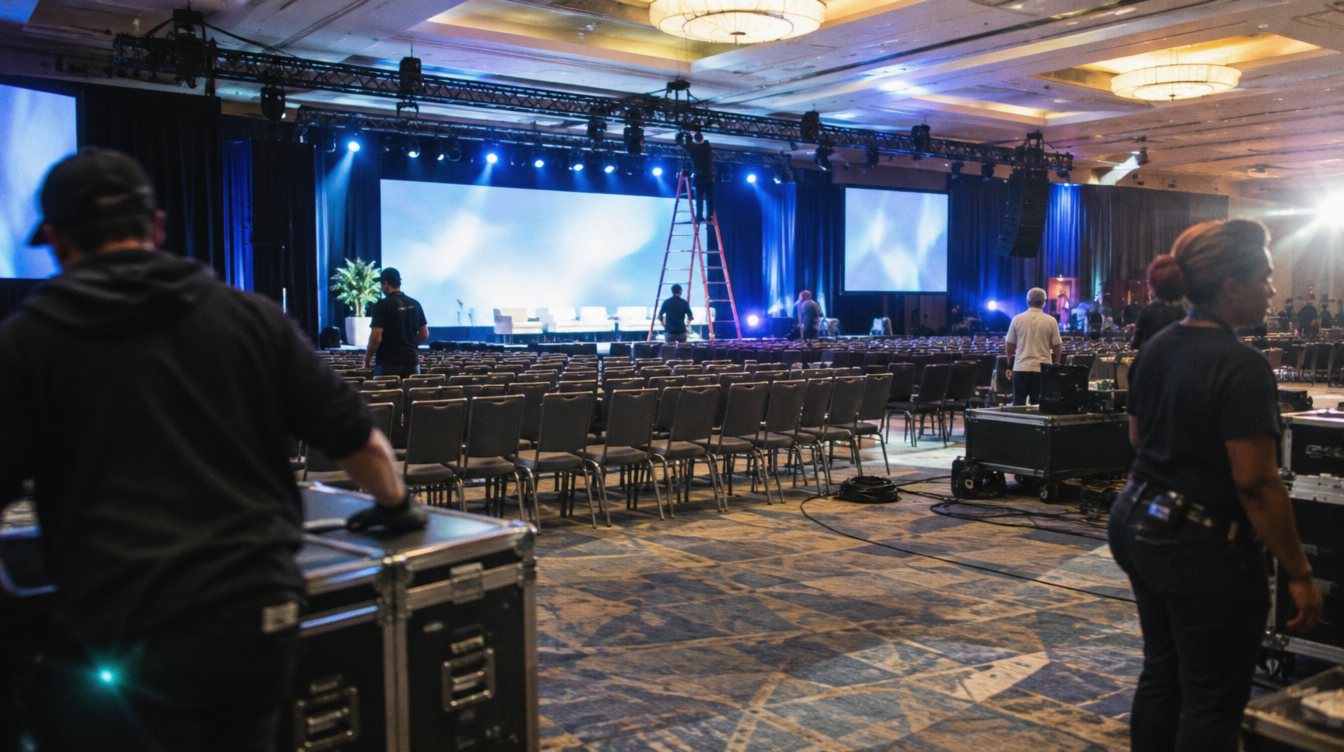
- DJ load-in and sound check
Setup is done before any students arrive, with cables taped and the equipment area secured.
- Doors open
Upbeat background music while students check in, take photos and find friends. The dance floor usually fills slowly at first.
- Dancing opens up
The DJ builds energy with familiar, high-energy songs and group dances.
- Prom court
The MC announces nominees and winners from a script provided by the school, then a short spotlight dance.
- Peak dancing
The biggest songs of the year, singalongs and requests.
- Last song and lights up
A clear last song announced in advance, then house lights up so chaperones can manage a calm exit.
The last song should feel like a finale, not a surprise. Announce it, play it, then lights up.
Sound, lighting and safety
Volume. School dances should feel loud and exciting on the dance floor, while leaving the edges of the room comfortable for conversation and for chaperones to communicate. A good DJ positions speakers so the floor gets the energy and the check-in table does not.
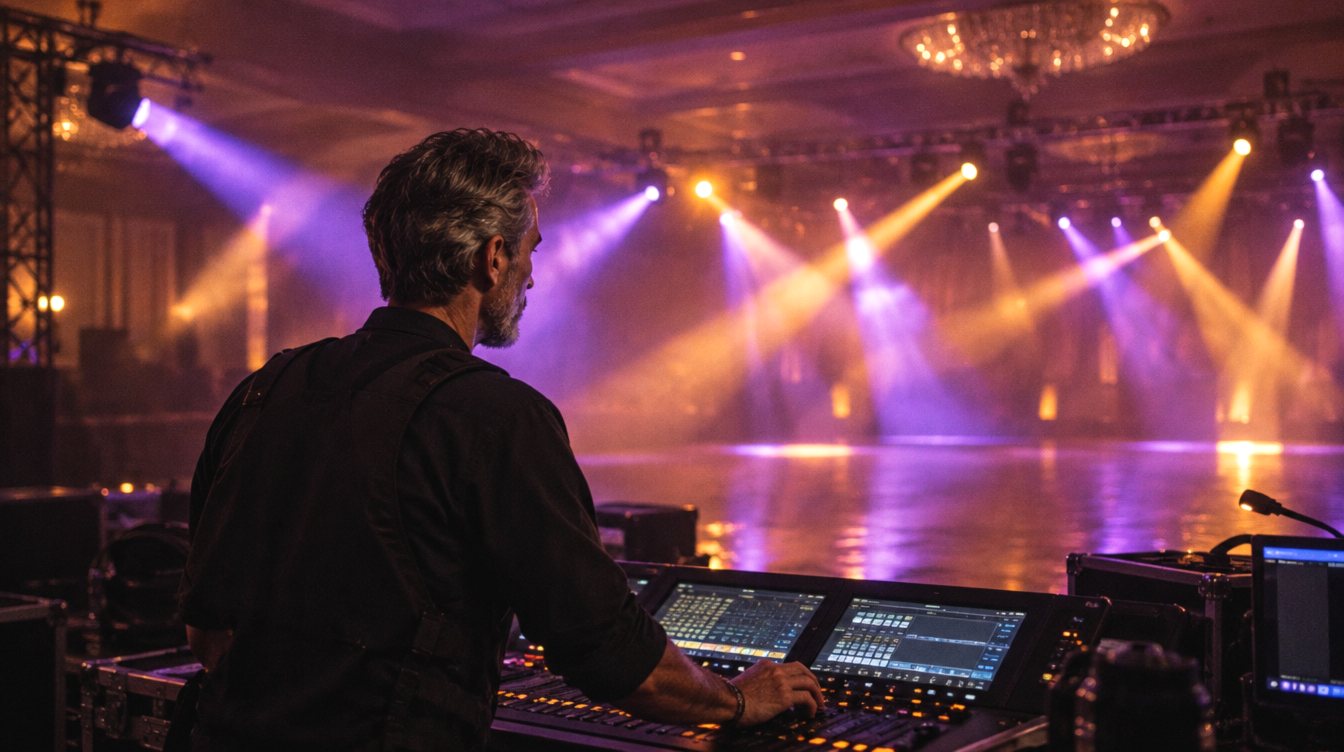
Lighting. Dance lighting makes a gym or ballroom feel like an event, but chaperones still need to see the room. Ask for lighting that is colorful on the floor without leaving the edges pitch dark. Our event lighting guide explains washes, moving heads and uplighting.
Safety. The DJ area should be roped off or clearly separated, with cables taped down and no student access to the equipment. The DJ should know who the lead chaperone is, how to make an emergency announcement, and how to kill the music and bring the lights up quickly if needed.
Paperwork schools should ask about
Schools and districts often have vendor requirements that a parent committee may not know about. Settle these early, especially for a dance at an off-campus venue.
- Insurance. Most venues and many districts require a certificate of insurance naming the school or venue. See our COI guide.
- Vendor approval. Some districts require vendors to be approved, registered or background checked in advance. Ask your district office what applies.
- Payment method. Purchase orders and district checks can take weeks. Confirm the deposit and payment timeline before you book.
- Venue rules. Load-in times, power, and whether fog or haze machines are allowed (many venues do not allow them because they can set off smoke detectors).
Questions to ask before you book
- Have you DJed school dances before?
Experience with this crowd matters more than any equipment list.
- How do you handle clean music?
Listen for record pools, screened requests and a plan for anything borderline.
- Will you follow our content policy and MC script?
The answer should be an easy yes.
- What is included?
Sound, a wireless mic, dance lighting, setup, teardown and travel should all be spelled out.
- Can you provide a certificate of insurance?
Get it well before the date, not the week of.
Our corporate and private event rate card starts at $1,795 for DJ and MC (a 4-hour event, with sound system and wireless mic), with stage and dance lighting from $1,495 and a roaming photo booth from $995. You can build a quote for an itemized price within one business day.
Frequently asked questions
How far in advance should a school book a prom DJ?
Prom season is busy, and many proms fall on the same few Saturdays. Booking 3 to 6 months ahead is safer, earlier if your date is fixed and your district payment process is slow.
Can students make the playlist?
Students should absolutely shape the music through a request list. The DJ should screen it for clean versions and still read the room on the night, rather than playing a fixed list in order.
What if a song with bad lyrics gets played?
A careful DJ prevents this by using screened clean edits. If something slips through, the DJ should cut it immediately when a chaperone asks, without drawing attention to it.
Do we need a separate MC for prom court?
Usually not. Most school dance DJs also MC. Give them a written script with name pronunciations so the announcement goes smoothly.