The short answer
- Plan a gala from the program outward: goal, budget and venue first, then a minute by minute run of show, then the sound, staging, lighting and screens that program needs.
- Start 6 to 12 months out for a large gala, lock the run of show 2 to 3 weeks before, and hold a real rehearsal on the day.
- The production pieces that matter most: clear speech sound for every seat, a lit stage, screens people can read, and one person calling cues.
A gala is a dinner, a show and a fundraiser stacked into one night. Guests judge it on simple things: could they hear the speeches, could they see the stage, did the program move, and did the room feel special. Every one of those comes down to planning the program first and building the production around it.
This guide walks through the order we recommend, a sample run of show, and how to size sound, staging and lighting so nothing is guessed on the day.
Start with the goal, the budget and the room
Before you book anything, write one sentence about what the night has to accomplish. Raise a specific amount. Honor three people. Launch a campaign. That sentence decides how much of the evening is program versus party, and it tells every vendor what matters most.
Then set a budget and pick the venue. The venue drives more of the production cost than most planners expect. A hotel ballroom with in-house rigging points, decent power and a built-in stage needs less gear than a raw warehouse or an outdoor tent, where every light, cable and riser comes in on a truck.
When you tour venues, ask about load-in times, freight access, where power is, whether there is a house sound system and whether outside AV is allowed or charged a fee. Each of those answers shows up as a line item on your AV quote.
Write the run of show before you hire production
The run of show is the minute by minute script of the night: who is on stage, what plays on the screens, which mic is live, and what the lights do. No AV team can quote accurately without a draft, and a vague one leads to either missing gear or paying for gear you never use.
Here is a sample shape for a four hour gala with dinner, a program and dancing. Your times will differ, but the order is common.
- Load-in and setup
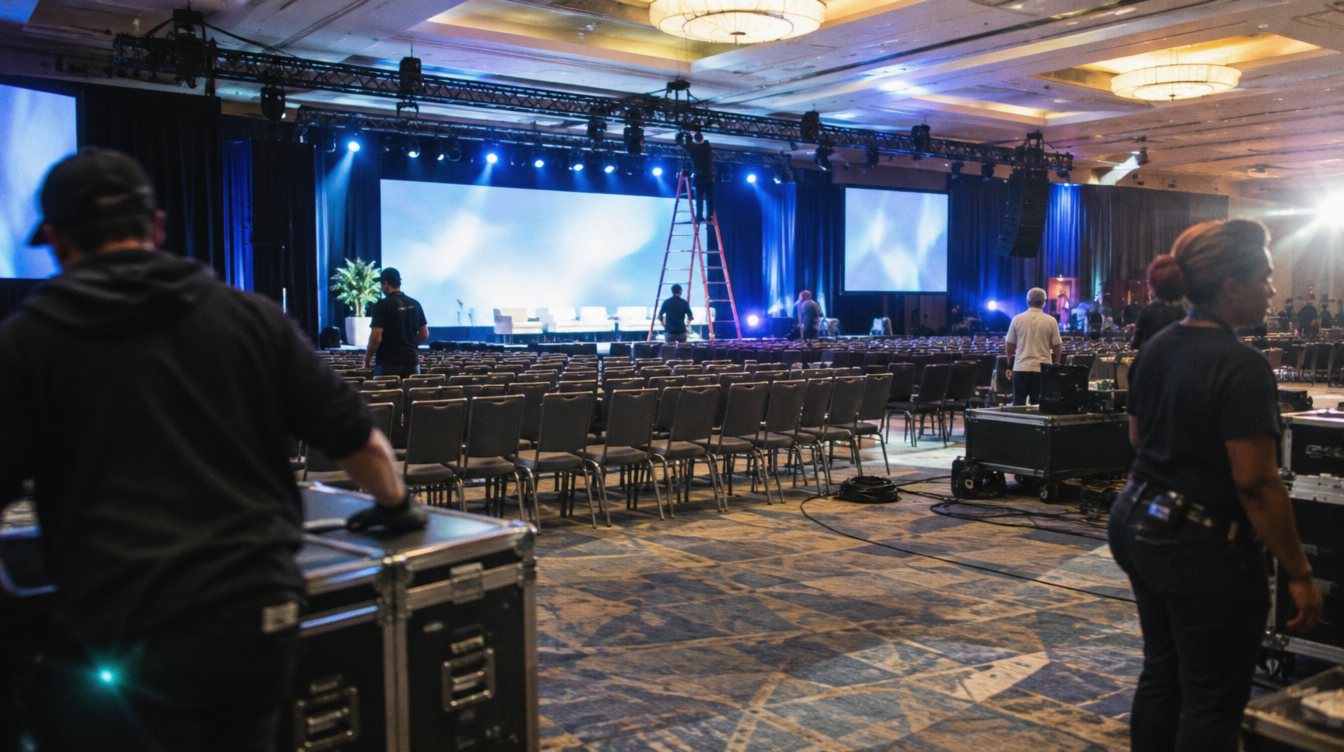
Staging, drape, sound, lighting and screens go in. Larger shows may need the room the night before.
- Sound check and rehearsal
Every speaker walks the stage, tests their mic and clicks through their slides. Every video plays with sound.
- Doors and reception
Walk-in music, uplighting on, sponsor slides looping on screens. The photographer works the room.
- Guests seated, welcome
The MC opens, thanks sponsors and sets up dinner. Keep it under five minutes.
- Program
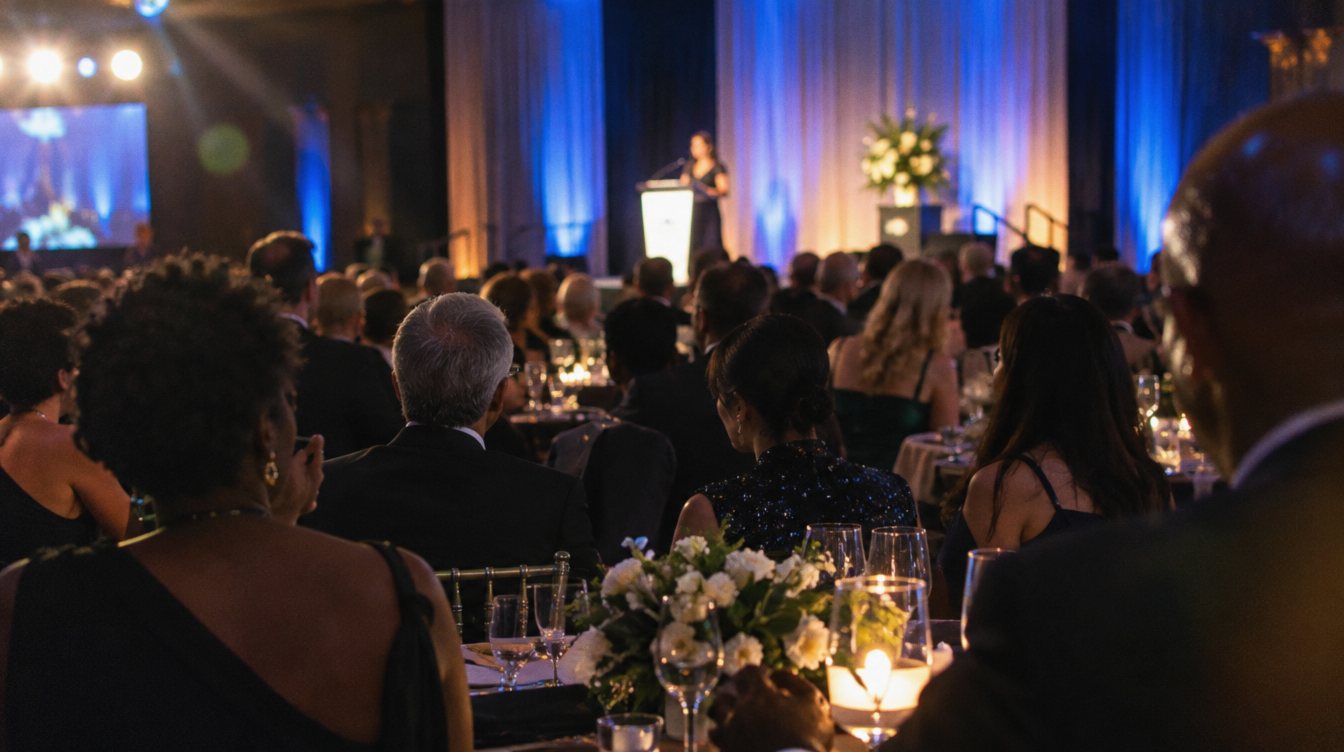
Mission video, keynote, honoree awards. Stage lights up, house lights down to a level where guests can still see their plates.
- Live auction or paddle raise
The highest energy moment of a fundraiser. Music stingers, a bright stage and a mic for the auctioneer who will move.
- Dancing
Dance lighting comes up, the DJ takes over, and the screens switch to a branded loop.
- Last song and close
A clear ending, house lights up, then strike after guests leave.
If a moment is not on the run of show, assume it will not happen the way you pictured it.
Two habits make a run of show work. First, give every segment an owner and a length, then add a little buffer, because speeches run long. Second, list the cue for each segment: the walk-up music, the slide or video, the mic number, and the lighting look. That one document becomes the script for your MC, your DJ and your AV crew.
Sound: speeches first, music second
At a gala, the most important sound is a voice at a podium reaching the back table clearly. Music matters, but a guest who cannot follow the keynote or the auction will remember that before anything else.
- Size the system to the room. A presentation setup with a speaker pair and a couple of wireless mics fits a room of up to about 150 guests. A ballroom of 300 to 400 with a program and dancing needs full-range speakers, subwoofers, a digital mixer and an engineer.
- Count the mics. Add up the most people speaking at once, then add a spare. A podium mic, a handheld for the MC, a handheld for the auctioneer and lavaliers for any honoree who walks the stage is a typical starting point.
- Route playback. Video sound has to come from the laptop into the mixer. Test every clip in rehearsal.
- Keep a tech on the board. Someone must unmute the right mic on cue for the whole program, not just during setup.
Put the DJ and the sound engineer on the same team, or at least the same intercom. Handoffs between program and party are where most dead air happens.
Staging and drape
A stage lifts speakers so guests past the first few tables can see them. It also gives the room a focal point for photos. Ask the venue what stage sizes they have, and whether their risers have stairs and a skirt.
Behind the stage, a drape wall or backdrop hides service doors and gives cameras a clean background. Pipe and drape is the simple, flexible option. Our pipe and drape guide covers sizes and how to measure. If you have sponsor logos or a step and repeat, place it where guests line up naturally, near the entrance or bar, not in a dead corner.
Lighting and screens
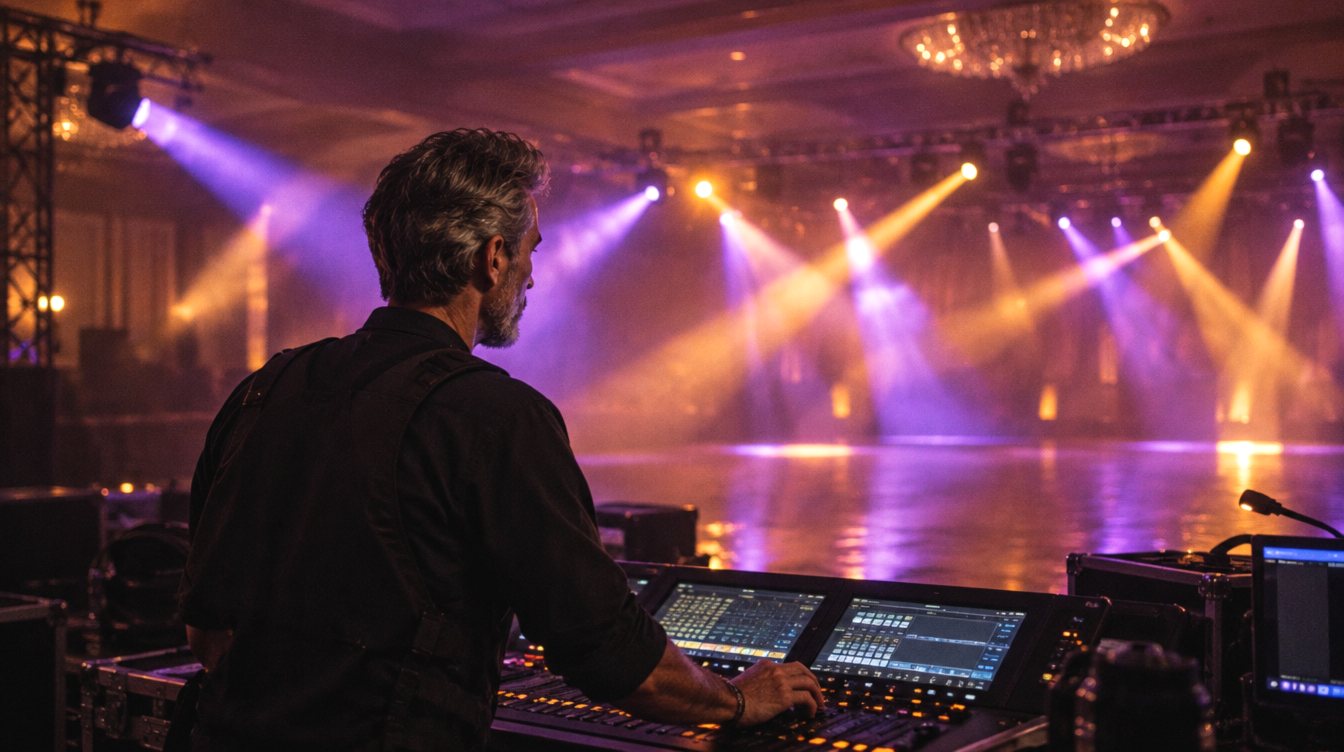
Gala lighting has two jobs: make the people on stage visible and make the room feel like an event, not a conference. Front light on the stage is non-negotiable if anyone is filming or streaming. Uplighting along the walls in brand or campaign colors transforms a plain ballroom for a modest cost, and moving heads and washes give the dance portion energy. Our event lighting guide explains each type.
For screens, think about the farthest seat. A 10 ft screen with a bright projector works in many ballrooms; long rooms often need two screens or a larger one. For very bright rooms or a big brand moment, an LED wall is the alternative to projection. Ask for a confidence monitor on the stage floor so speakers can see their slides without turning around.
What gala production can cost
Here is how a mid-size gala adds up using our published rate card. These are 4-hour starting prices; longer events are quoted by the hour, and your room and program may need more or less.
| Line item | Starting price |
|---|---|
| DJ and MC | $1,795 |
| Full event sound, up to 400 guests | $4,995 |
| Stage and dance floor lighting | $1,495 |
| Uplighting, 20 lights at $65 | $1,300 |
| Large projection, 7,500 lumens | $1,495 |
| Pipe and drape, 40 ft at $175 per 10 ft | $700 |
| Event photography | $1,295 |
That example totals $13,075 before any recap video or livestream. A smaller gala of 150 guests might swap full event sound for presentation sound at $1,695 and use one 10 ft screen. Setup and strike are included within 75 miles of Los Angeles. For a wider view of the market, see event AV and production cost in Los Angeles.
The final two weeks
- Final run of show sent to every vendor, the venue and the MC
- All slides and videos collected in one folder, in the right order, with file names that match the run of show
- Speaker list with name pronunciations for the MC
- Rehearsal time confirmed with every speaker who can make it
- Certificates of insurance sent to the venue for every vendor
- Load-in and parking details shared with all crews
- A point person named for day-of questions, who is not also giving a speech
When we produce a gala, we work from your run of show and send back an itemized quote within one business day. You can start on our quote form with whatever you know so far.
Frequently asked questions
How far in advance should we start planning a gala?
For a large gala, 6 to 12 months is common, mostly because good venues book early. Production can usually be confirmed 2 to 4 months out, with the run of show finalized 2 to 3 weeks before.
Do we need a separate MC if we have a DJ?
Not always. Many DJs host the logistics (welcomes, dinner, transitions), while a board member or celebrity guest handles the emotional moments. For a fundraiser, a professional auctioneer usually runs the paddle raise.
How long should the program portion be?
Most galas aim for 45 to 75 minutes of total program, broken into short blocks around dinner. Long uninterrupted programs lose the room, especially after dessert.
Should we livestream our gala?
If you have donors or supporters who cannot attend, a stream of the program can extend your reach. Plan it early, because it changes lighting, camera positions and internet needs. Our hybrid event guide explains what is involved.