The short answer
- Choose a cinematic interview when one person carries the story: a founder feature, an expert sit-down or a premium testimonial.
- Choose a documentary interview when the story belongs to several people and needs real moments: a mission film, an impact story or a mini-doc.
- Cinematic is about control: lighting, framing and polish around one voice. Documentary is about breadth: more voices, more b-roll, more story built in the edit.
- At EMP Created, cinematic interviews start at $2,795 and documentary-style interviews start at $3,500.
A cinematic interview puts one person in a carefully lit, film-style frame and lets their voice carry the video. A documentary interview gathers several voices and real moments, then builds the story in the edit. If your message lives in one person, go cinematic. If it lives in a community, a team or a change over time, go documentary.
Both use interviews. The difference is where the effort goes: into the look of a single conversation, or into the range of people and moments around it.
What a cinematic interview is
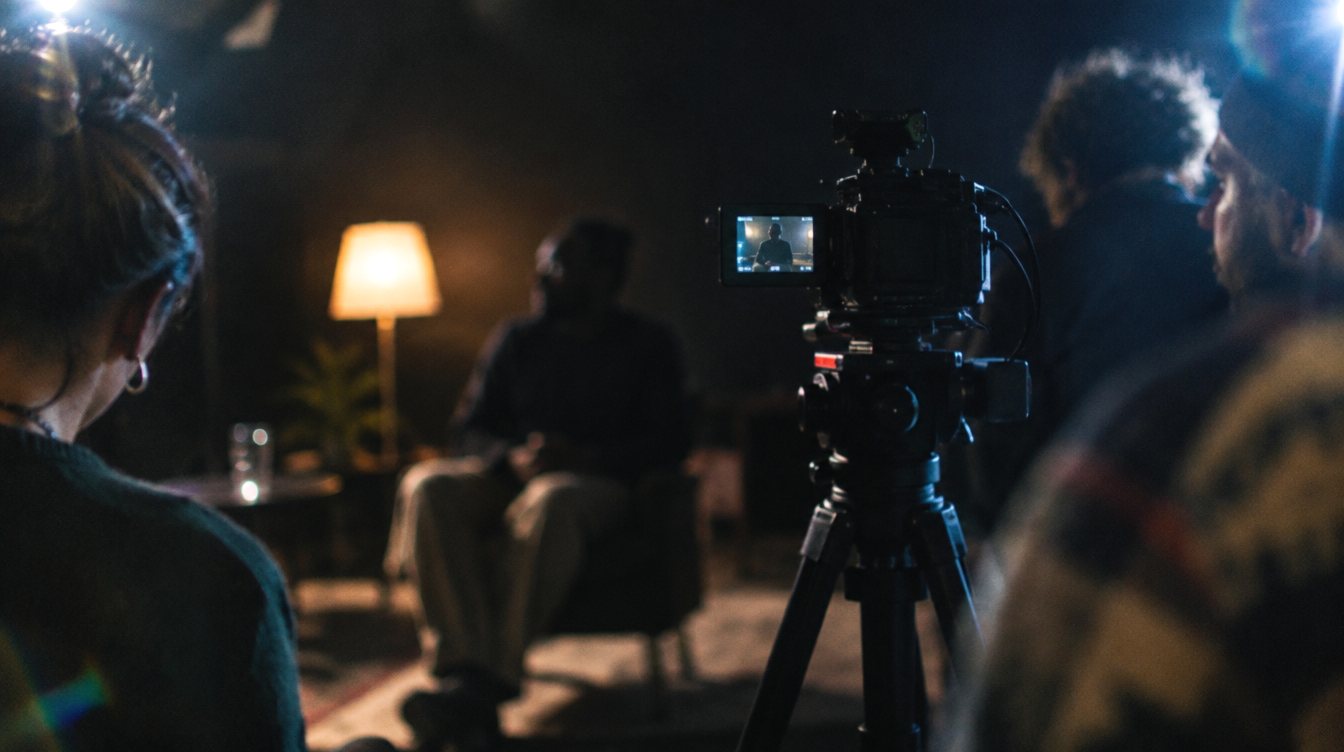
A cinematic interview treats one subject like the lead in a film. The setup is deliberate: a chosen background with depth, shaped lighting that flatters the face, a shallow focus look, and usually two cameras so the edit can cut between a wide and a close angle. Audio is captured with care because the voice is the whole story.
The result feels premium and focused. Viewers get to know one person, how they think and why they do what they do. That makes this format a strong fit for founders, executives, doctors, consultants, artists, and any customer testimonial that needs to look as good as the brand behind it.
The craft here overlaps with our teaching guides on how to light an interview and how to record interview audio, if you want to see what goes into the setup.
What a documentary interview is
A documentary-style interview is one part of a larger story. You might interview a program director, a volunteer and someone the program helped, then pair their words with footage of the work actually happening. The interviews are often lit more simply and filmed where people work, because authenticity matters more than polish.
The story is shaped in the edit. Different voices answer the same questions from different angles, and b-roll shows what they describe. This format fits nonprofits, mission and impact films, community programs, healthcare and education stories, and company culture pieces where no single person is the whole story.
Cinematic asks how good one voice can look. Documentary asks how many true moments it takes to tell the story.
Side by side
Cinematic interview
- One subject, sometimes a short series
- Controlled set, designed lighting, two cinema cameras
- Little or targeted b-roll
- Story told mostly in the subject's words
- Feels polished, intimate and premium
Documentary interview
- Several voices
- Real locations, lighter setups that move fast
- Lots of b-roll of people and work in action
- Story built in the edit from many pieces
- Feels authentic, layered and human
| Question | Cinematic | Documentary |
|---|---|---|
| Who is on camera? | One person (or a few, filmed separately) | Several people, plus real moments |
| Where is the effort? | Look, light, framing and performance | Access, b-roll and story structure |
| Typical length | Full interview plus a short highlight | 2 to 3 minute film, up to 5 to 8 minutes for a mini-doc |
| Best uses | Founder features, expert sit-downs, testimonials | Mission films, impact stories, culture pieces |
| Planning focus | Questions, set and wardrobe | Who to interview, what to film, scheduling access |
How to choose: four questions
- Whose story is it?
If the honest answer is one person, cinematic. If it is a team, a program or a community, documentary.
- What should the viewer feel?
Trust in an expert or a leader points to cinematic. Connection to a cause or a culture points to documentary.
- Is there something to film besides talking?
If the work itself is visual (a clinic, a classroom, a kitchen, a build), documentary lets you show it. If the value is in ideas and expertise, cinematic keeps the focus on the person.
- How will you use the footage?
A cinematic interview gives you a long, clean conversation you can cut into many short clips. A documentary film gives you one strong story plus social cuts built from it.
Not sure? Start from the viewer. Write down the one thing they should believe after watching, then ask which format proves it better: one credible voice, or many voices and real moments.
What each looks like at EMP Created
Both formats are on our content menu with published starting prices, and every project gets a fixed quote after a 20-minute discovery call.
EMP interview video starting prices (scale: $0 to $5,000)
- Cinematic, Single Interview: half day, two cinema cameras, lighting design, a full edited interview plus a 60-second highlight.
- Cinematic, Interview Series: full day, up to three subjects, each with a full edit and a highlight.
- Documentary, Story Session: half day, one to two interviews, a 2 to 3 minute film plus two social cuts.
- Documentary, Mini-Doc: full day, up to four interviews plus b-roll, a 5 to 8 minute film.
We shoot on Canon cinema cameras (the EOS R5 C and EOS C50) with Canon RF L-series lenses, and our founder, Ceasare Orlando, is our Lead Cinematographer.
Can you combine them?
Yes, and it is common. A documentary film might include one carefully lit anchor interview with the founder, surrounded by lighter interviews and b-roll. Or a cinematic founder interview might include a few minutes of the founder at work to break up the talking. The question is which format leads. Decide that first, then borrow from the other where it helps.
Whichever you choose, the people on camera make or break it. Share our guide on preparing for an on-camera interview with everyone you plan to film.
Frequently asked questions
Is a cinematic interview just a nicer-looking documentary interview?
Not quite. It is a different approach. Cinematic invests in the look and performance of one subject. Documentary invests in more voices, more locations and more b-roll. Either can look excellent.
Which is better for a customer testimonial?
For a single customer telling their story, a cinematic interview usually works best. If you want several customers or want to show your service in action, a documentary approach fits better.
Do documentary interviews need a script?
No. They rely on prepared questions and real answers. The structure comes from planning who to interview and from the edit, not from written lines.
How long does a documentary-style shoot take?
A short story with one or two interviews can fit in a half day. A mini-doc with several interviews and b-roll usually needs a full day or more, depending on locations.