The short answer
- Know the three points you most want to make, not a memorized script.
- Practice your answers out loud, ideally on your phone camera, a few days before.
- On the day, answer in full sentences that include the question, talk to the interviewer (not the lens), and take your time.
- Dress in simple solid colors, sleep well, and let the crew handle the technical side.
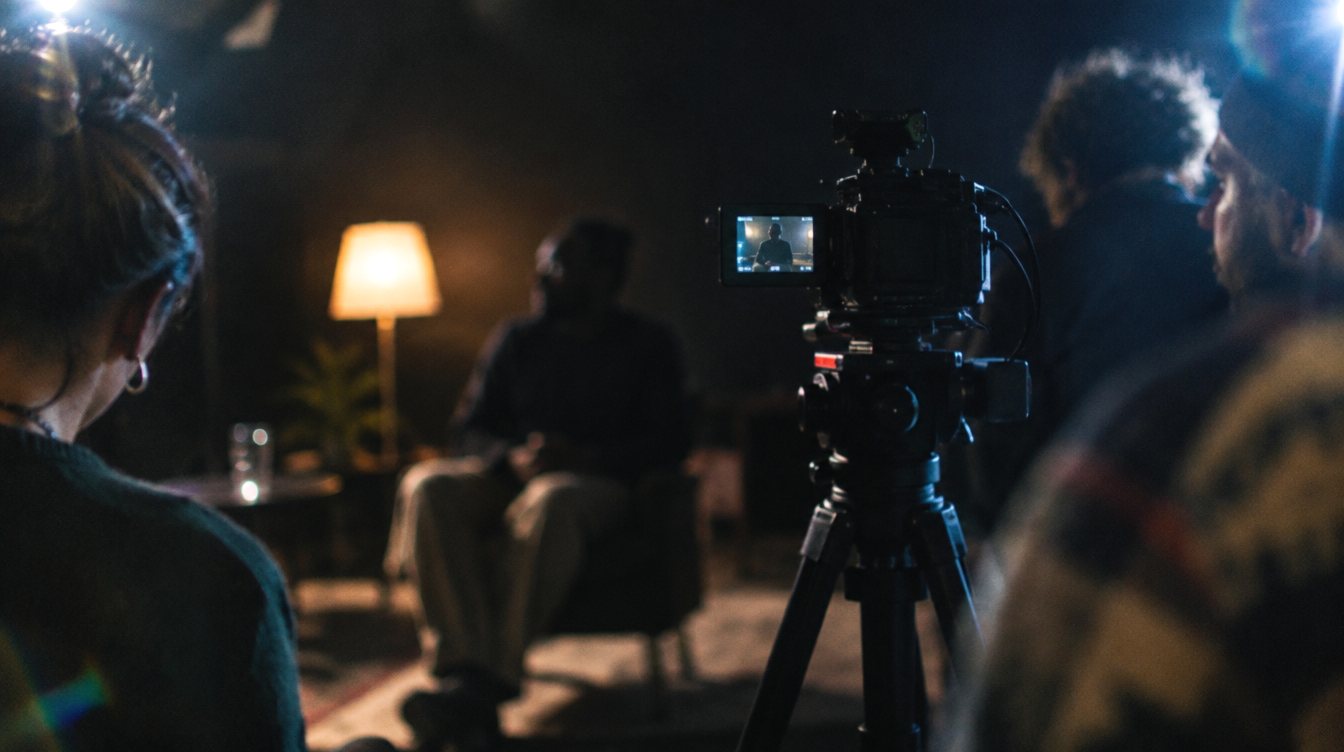
The best way to prepare for an on-camera interview is to know your key points, practice saying them out loud, and then trust the conversation. You do not need to memorize lines. You need to know what you want to say well enough that you can say it in your own words, a few different ways, while someone asks you questions.
Almost everyone is nervous before their first interview. That is normal, and a good crew plans for it. This guide covers what to do the week before, the night before and on the day, plus the habits that make answers easy to edit.
Understand how interviews are edited
Knowing what happens after the shoot changes how you answer. In most business interviews, the interviewer's voice is cut out. Your answers have to stand on their own, which is why crews ask you to repeat the question in your answer.
Hard to use
- Q: "What makes your team different?"
- A: "Probably the training. We do it every week."
- Without the question, "probably the training" means nothing to the viewer.
Easy to use
- Q: "What makes your team different?"
- A: "What makes our team different is training. Every person on staff trains every week."
- The answer is complete on its own and can go anywhere in the video.
The editor will also cut between your answers, so short, complete thoughts are more useful than long winding ones. You can always pause, breathe and start a sentence again. Nothing is live.
You are not giving a speech. You are having a conversation that happens to be filmed.
The week before
- Get the questions in advance
Ask the production team for the question list or at least the topics. Most crews are happy to share it. Read the questions, but do not write word-for-word answers.
- Pick your three key points
Decide the three things you most want viewers to remember. Write each one as a single plain sentence. If an answer drifts, you can steer back to one of these.
- Collect one or two real examples
Specific moments are more believable than general claims. Think of a real situation that shows each key point, and make sure you are allowed to talk about it.
- Practice out loud on camera
Prop up your phone, ask yourself the questions and record the answers. Watch them back once. You will notice filler words, answers that run long and points that land well. Do this two or three times over the week, not all at once.
- Plan your outfit
Choose clothing early so you can swap it if needed. Our guide on what to wear on camera covers colors, patterns and fit.
Practice drill: answer each question three times in a row, aiming for about 30 seconds, then 20, then 10. The short versions often become the best clips.
The day before and the morning of
- Confirm the details
Check the call time, location, parking and who your contact is. Lay out your outfit and a backup. Read your three key points once, then put them away.
- Rest
Sleep matters more than one more rehearsal. Go easy on salty food and alcohol, which can show up as puffiness on camera.
- Warm up your voice
Talk out loud on the way in: a phone call, reading something aloud, or running your key points in the car. Your first answers will sound more natural.
- Settle in
Arrive a little early, use the restroom, get water, and silence your phone completely (not just vibrate). Let the crew set lights and mic while you chat.
During the interview
- Look at the interviewer, not the camera, unless the crew asks you to speak directly to the lens
- Repeat the question in your answer so it stands alone
- Take a breath before you answer. Pauses are easy to cut, and rushing is not
- Keep answers short. If you have more to say, the interviewer will ask a follow-up
- If you stumble, stop, pause and start the sentence again from the beginning
- Sit up and lean slightly forward. It reads as engaged on camera
- Avoid tapping, clicking a pen or touching the lav mic on your clothing, which all show up in the audio
- Ask for water or a break whenever you need one
Crews will often ask the same question again later, in a slightly different way. That is not a sign your first answer was wrong. It gives the editor choices. Answer it fresh each time.
What not to worry about
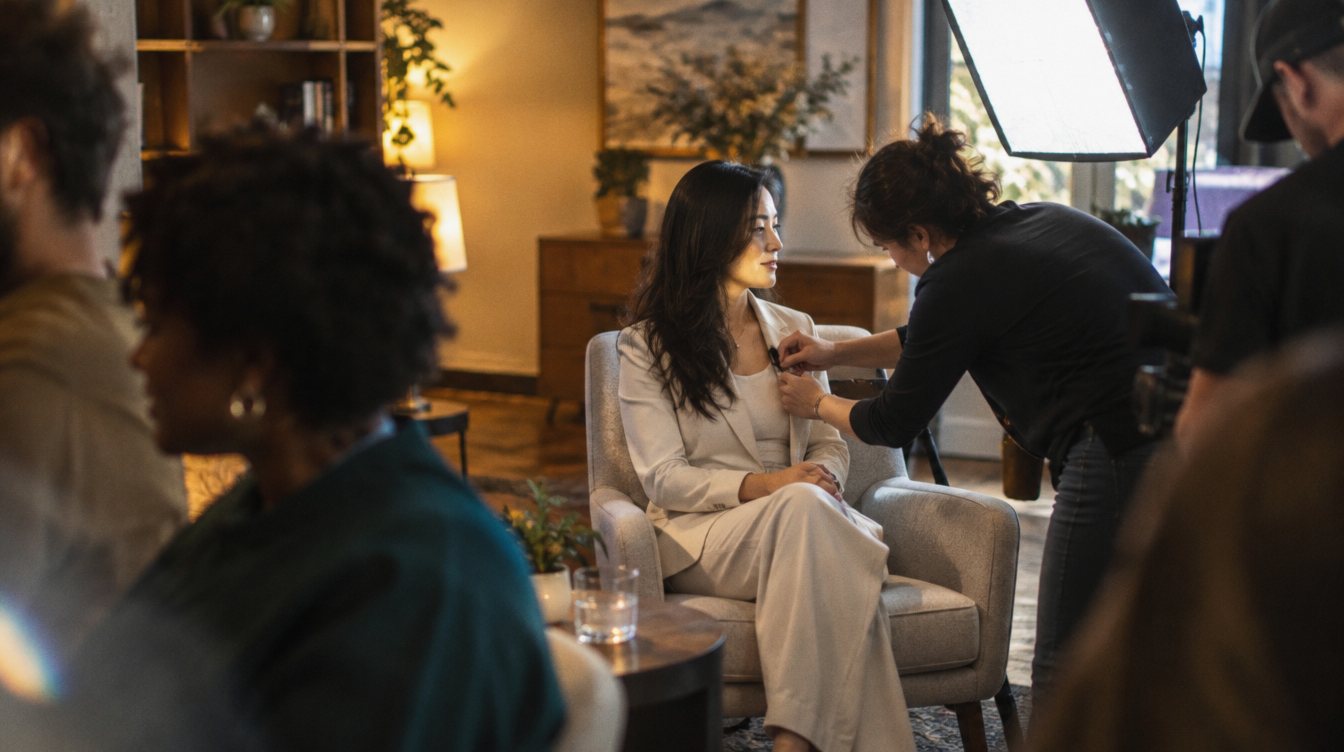
Lighting, framing, focus and sound are the crew's job. On a professional shoot, the team sets the light to flatter you, places a small microphone on your clothing, and watches for things like a stray hair or a reflection in your glasses. If you would like to see what goes into that setup, our guides on lighting an interview and recording interview audio walk through it.
You also do not need to be perfect. Editors work with natural speech every day. A real person explaining something they care about is more convincing than a flawless reading.
Tips for the person organizing the shoot
If you are the marketing lead or business owner setting up interviews for others, a little support goes a long way:
- Send the questions and wardrobe notes to every speaker at least a few days ahead.
- Schedule your most nervous speaker after a calmer one, so they can watch the setup first.
- Keep the room clear. An audience of coworkers makes most people more nervous.
- Protect their time. Block the calendar so they are not rushing in from a meeting.
When we film interviews at EMP Created, planning starts with a 20-minute discovery call, then a fixed quote and a shot plan, so everyone knows what the day looks like before the cameras come out. You can see our cinematic and documentary interview options on our content page.
Frequently asked questions
Should I memorize my answers?
No. Memorized answers usually sound stiff, and if you forget a word it is hard to recover. Know your key points and examples well, then say them naturally.
Where should I look during an on-camera interview?
For most interviews, look at the interviewer sitting just beside the camera. Only look into the lens if the crew asks you to speak directly to the viewer.
What if I mess up an answer?
Pause, take a breath and start the sentence again. Interviews are edited, so a restart costs nothing. You can also ask to try a question again later.
Can I bring notes?
You can review notes before the interview, but avoid reading from them on camera. Glancing down shows in the footage. Keep a short list of your three key points nearby for breaks.
Do I need to do my own makeup?
Unless the production includes a makeup artist, plan on your usual grooming plus something to reduce shine, since lights can make skin look oily. Bring blotting papers or a translucent powder.