
The short answer
- Your first paid gigs usually come from people who already know you: friends, family, coworkers and their networks.
- Before you ask anyone, have three things ready: a short demo video, a simple offer with a price, and a reliable setup.
- Assisting or second DJing for an established company is one of the fastest ways to get paid, learn weddings and earn referrals.
- Every gig should produce something for the next one: a clip, a review, a referral or a vendor contact.
Most DJs land their first paid gigs through people they already know, then grow by turning each event into the next one. You do not need a big following or a club residency. You need proof that you can do the job (a short demo), a clear offer people can say yes to, and the habit of asking for the next booking every time you play.
Here is the practical path, from getting ready to getting booked to getting booked again.
Get gig-ready before you ask
The fastest way to lose a first opportunity is to say yes before you are ready. A friend's birthday that goes badly travels just as fast as one that goes well. Check off these basics first.
- You can play two or three hours without stopping, with smooth enough transitions that nobody notices them
- Your music is organized into crates you can find under pressure, with clean edits ready
- You own or can reliably borrow a setup: controller, laptop, speakers, a wireless mic and cables
- You have a backup music source (a phone or second device) in case your laptop fails
- You can talk on a mic clearly for a birthday announcement or a toast
- You know how long your setup and teardown actually take
If you are still choosing gear or software, start with our guides to DJ equipment for beginners and how to beatmatch.
Build a demo that sells
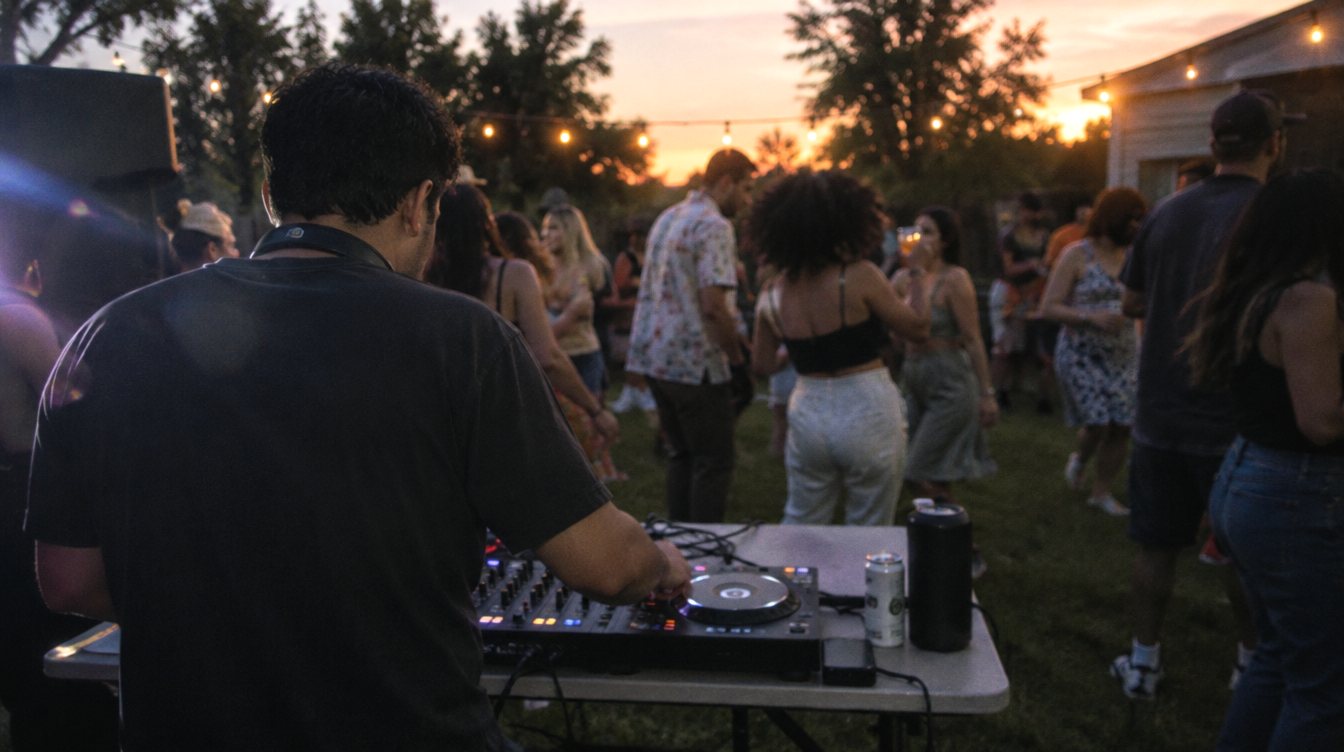
A long mix on a streaming site shows you can mix. A short video shows you can run a room, and that is what most party and wedding clients want to see.
- Record real people dancing
Even a small house party works. Ask a friend to film 20 to 30 second clips of the floor and of you working, with the host's permission.
- Cut a 60 to 90 second highlight
Show the setup, a full dance floor, a transition and a moment on the mic. Lead with your best ten seconds.
- Make vertical versions
Post short clips where your potential clients scroll. Our guide to shooting vertical video for Reels and TikTok covers the basics.
- Add a simple setup photo
Clean cables, a tidy booth and decent lighting tell clients you take the job seriously.
Keep the demo honest. Do not use footage from events where you were a guest, or clips from another DJ's party. Clients eventually find out, and venues talk.
Where first gigs actually come from
There are several realistic paths into paid work. Most DJs use more than one at the start.
| Path | How it works | What it teaches you |
|---|---|---|
| Your network | Tell everyone you DJ, with a link to your demo and a starting price | Private parties, birthdays, small celebrations |
| Assisting a DJ company | Help with setup and teardown, then second DJ or run cocktail hour | Weddings, MC flow, professional gear, how problems get solved |
| Bars and small venues | Pitch an off-night with a clear idea and promote it | Reading strangers, playing long sets, building a local following |
| Community events | Schools, nonprofits, gyms, cultural organizations | Mixed-age crowds and outdoor sound |
| Vendor referrals | Photographers, planners and venue coordinators who need a DJ they trust | Working within a timeline and a team |
Why assisting is the underrated path
Many new DJs want to jump straight to their own weddings. Assisting a working wedding DJ often gets you there faster, and you get paid along the way.
Assist or second DJ first
- Paid from day one, with no marketing cost
- Learn MC timing, formalities and vendor teamwork up close
- Use professional gear and see real backup plans
- Build references inside the industry
Go solo right away
- Keep the full fee
- You find every client yourself
- Mistakes happen at someone's only wedding
- Harder to get venue trust without a track record
To find these roles, look up multi-op DJ companies in your area and send a short, specific message: who you are, what you can already do, your availability, and a link to your demo. Offer to help load in and out. Show up early, follow the lead DJ's rules exactly, and do not hand out your own cards at their events.
The first gig gets you paid. The way you handle it gets you the next three.
A simple 90-day plan
Here is a realistic first three months for a DJ who can already mix but has not been paid yet.
- Get ready
Organize crates, test your full setup at home for three hours straight, and write a simple one-page offer with your price and what is included.
- Make proof
Play one or two small parties for friends, free or discounted, in exchange for video and a written review. Cut your demo.
- Tell people and pitch
Post your demo, message your network directly, and contact a few local DJ companies about assisting. Follow up once, politely, after a week.
- Work and follow up
Play every gig like it is a showcase. After each one, ask for a review, a referral and permission to post clips.
Turn every gig into the next one
Repeat bookings and referrals are where a DJ business actually grows. Build a few habits now so they are automatic later.
- Bring a way to be found
A simple card or a QR code on your booth that links to your contact page. Keep it subtle at private events, and ask the host first.
- Collect contacts
Get the names of the venue coordinator, photographer and planner. Thank them by email the next day.
- Ask for the review within a week
Send a short message with a direct link while the night is still fresh.
- Track every lead
Even a spreadsheet works: who asked, when, the date they need, and your follow-up. Fast replies win bookings, which is why our guide on how fast wedding vendors should reply to inquiries matters even for a one-person DJ business.
Once your calendar starts filling, revisit your rates. Our guide on how to price DJ services when you are starting out walks through setting a floor price and raising it over time.
Frequently asked questions
Do I need a following on social media to get booked?
No. Private party and wedding clients care far more about seeing you run a room and hearing from people who hired you. A short demo and a few reviews beat a large follower count for these jobs.
Should I play my first gigs for free?
One or two discounted or free events can be worth it if you get video, a review and referrals in return. After that, charge. Free gigs for strangers rarely lead anywhere.
How do I approach a DJ company about assisting?
Send a short message with your experience, what you can already do, your availability and your demo link. Offer to help with load-in and teardown, and be clear you will follow their rules on the job.
Can I DJ weddings right away?
You can, but weddings need MC skills, timeline management and backup gear. Many DJs build those by assisting or playing parties first, so their first solo wedding is not also their first time running formalities.