The short answer
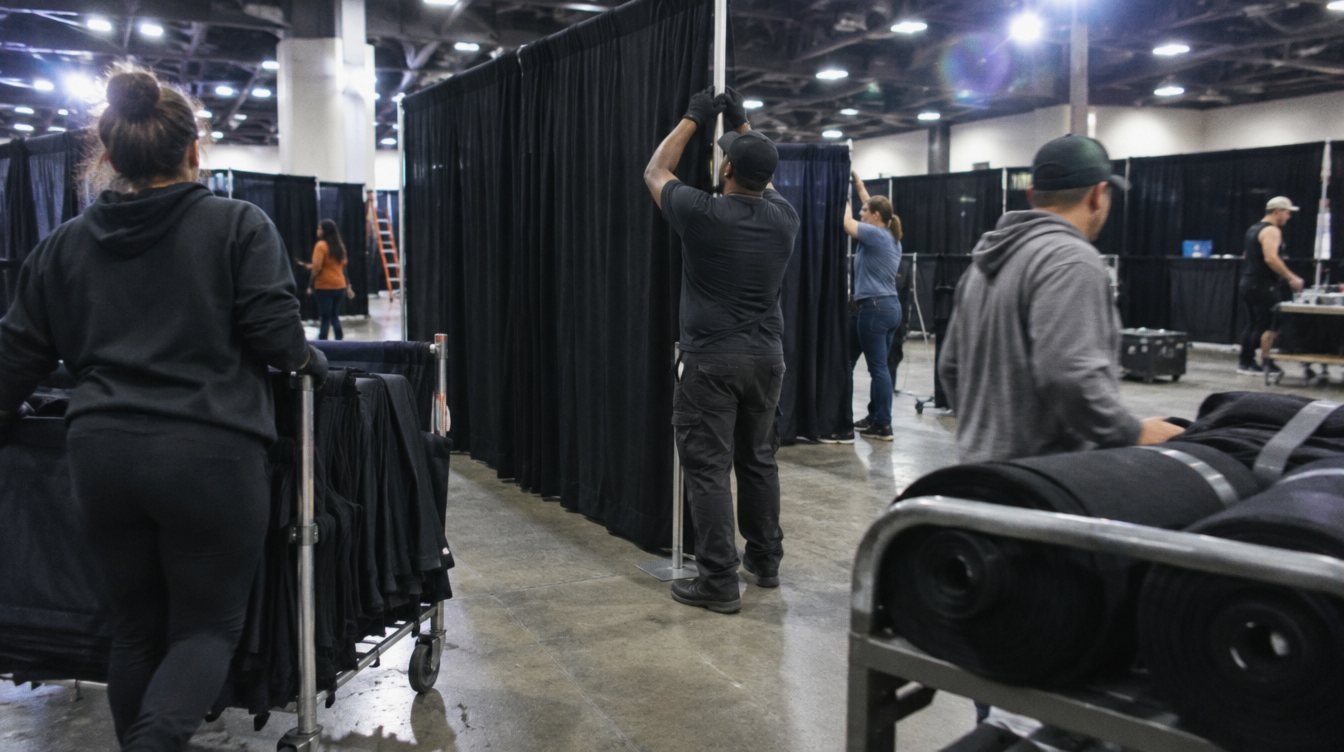
- Pipe and drape is a freestanding fabric wall: weighted bases, vertical uprights, horizontal crossbars, and fabric panels hung from the crossbars.
- It is used for stage backdrops, hiding service areas, dividing rooms and building trade show booths. 8 ft black is the workhorse size.
- Rental is usually priced per foot or per section. Ours is $175 per 10 ft section of 8 ft black drape, 30 ft minimum, with setup included within 75 miles of LA.
Pipe and drape is one of the least glamorous and most useful pieces of event production. It turns a messy room into a clean one, gives a stage a finished look, and hides everything guests should not see. If you have ever seen a black curtain wall behind a DJ or along the back of a ballroom, you have seen it.
Here is how it works, what sizes are common, how to figure out how much you need, and what it typically costs.
What pipe and drape is made of
Every pipe and drape wall has four parts. Knowing them makes quotes easier to read.
| Part | What it does |
|---|---|
| Base | A heavy flat steel plate that holds each upright. Bigger, heavier bases are used for taller walls. |
| Upright | The vertical pole. Many are telescoping, so one pole covers a range of heights. |
| Crossbar | The horizontal bar between two uprights that the fabric hangs from. Adjustable crossbars change the width of each section. |
| Drape | The fabric panels, sewn with a pocket at the top that slides over the crossbar. |
One "section" is the span between two uprights. On our setups, a section is 10 ft wide, so a 30 ft wall is three sections and four uprights.
Common sizes and fabrics
Height is the first decision. 8 ft is the standard for backdrops behind a DJ or a head table, trade show booths and masking service areas. Taller walls of 10 to 16 ft are used to hide a whole section of a ballroom, mask a stage wing or build a dramatic backdrop, and they need heavier bases and more labor.
Fabric is the second decision. Black is the default because it disappears, which is exactly what you want when the goal is to hide something. Other common choices:
- Poly or "banjo" fabric: lightweight, affordable, fine for masking and trade shows.
- Velour: heavier and richer looking, blocks light better, common in theaters and upscale stages.
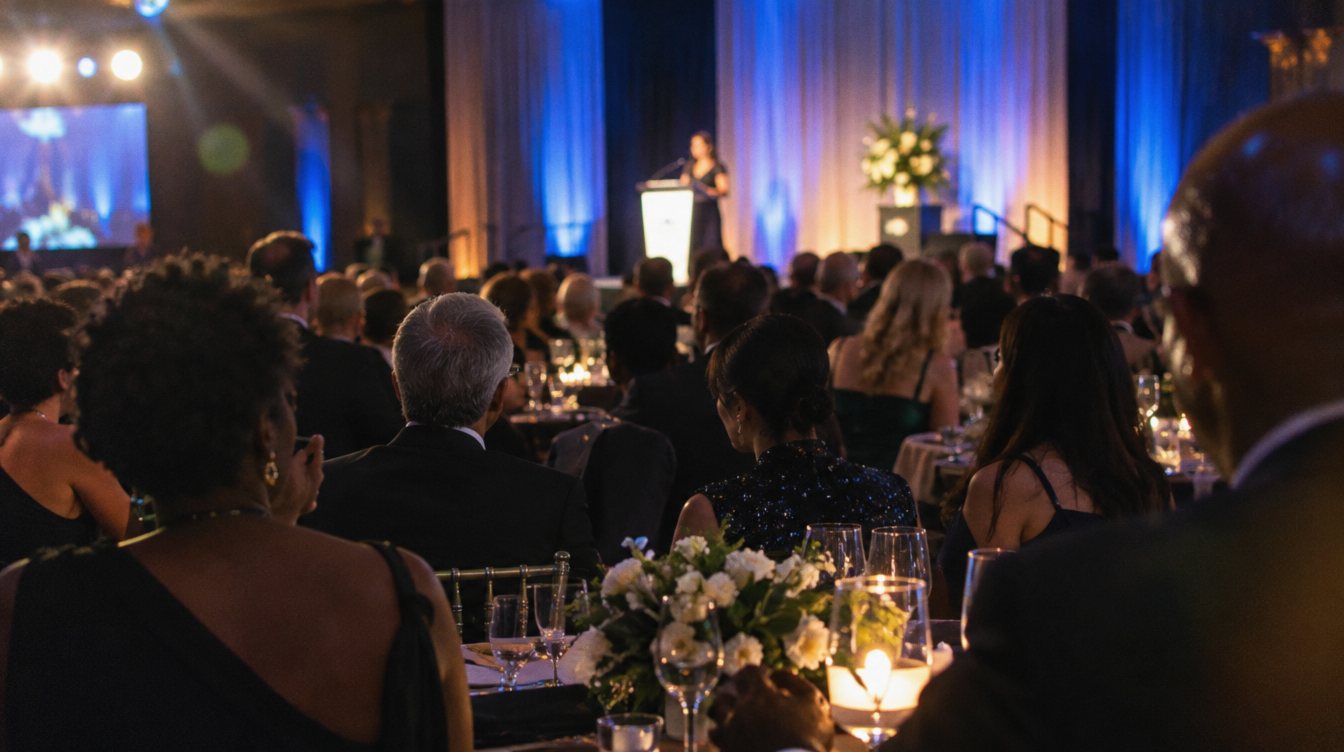
- Sheer or voile: translucent, often white or ivory, used for soft wedding and gala backdrops where light shines through.
Uplighting turns plain drape into decor. White or ivory sheer fabric takes color beautifully; black drape absorbs most of it, which is why it is used for masking rather than as a lit feature.
What pipe and drape is used for
- A clean backdrop behind a DJ, band or head table
- Masking kitchen doors, storage, cases and cables behind a stage
- Dividing a large ballroom so a smaller crowd does not feel lost
- Building a backstage area or a quick green room
- Trade show and expo booths (a 10 by 10 ft booth commonly uses an 8 ft back wall and lower side rails)
- A neutral background for photo, video and livestream setups
At corporate events, drape behind the stage also helps cameras. A speaker in front of a flat black wall looks cleaner on a stream than one in front of a busy hotel wall or an exit sign. See our hybrid event guide for more on that.
How to measure for pipe and drape
- Measure the run
Measure the length of wall you want to cover in feet, including any corner returns. If you are hiding something, measure its full width plus a few feet on each side.
- Check the height
Make sure the drape is taller than what it hides. An 8 ft wall covers most doors and equipment cases. A tall stage set may need more.
- Round up to full sections
Divide by the section width and round up. A 35 ft run on 10 ft sections is four sections.
- Plan the clearances
Keep exits, fire extinguishers and exit signs visible and unblocked. Leave a walkway behind the drape if staff need access.
- Send a photo or floor plan
A photo of the wall or a venue diagram lets your production team confirm the count before the day.
What pipe and drape costs
Rental pricing is usually quoted per linear foot or per section. In our research of rental listings, basic 8 ft black drape often runs around $8 to $20 per linear foot, and some companies charge delivery and setup on top. Taller walls, premium fabrics and rush installs cost more. Prices change, so treat these as typical ranges, not quotes.
8 ft black drape, price per linear foot
Our price is $175 per 10 ft section of 8 ft black drape, with a 30 ft minimum. Delivery, setup and strike are included within 75 miles of Los Angeles. Here is how common wall sizes work out:
When you compare quotes, check that the price includes delivery, setup, strike and enough crew for the height. A low per-foot rate with separate labor and delivery fees can end up costing more. Our guide to reading an AV quote covers what to look for.
The best drape is the drape nobody notices. Its job is to make everything else look finished.
Safety and venue rules
Most venues will ask a few questions about any freestanding structure. Event fabrics should be flame retardant, and many venues and fire officials ask for the fabric's flame certificate, so make sure your provider can supply it. Walls should be weighted properly for their height, kept clear of sprinkler heads and never placed in front of exits. Outdoors, wind is the big risk: drape acts like a sail, so outdoor walls need extra weight or a sheltered position. Ask your venue whether vendors need a certificate of insurance, too.
Pipe and drape is one line on our event production menu, and it is often paired with uplighting, a stage and projection.
Frequently asked questions
What is the standard height for pipe and drape?
8 ft is the most common height for backdrops, masking and trade show booths. Taller walls of 10 to 16 ft are used for large rooms, stages and dramatic backdrops.
How much pipe and drape do I need?
Measure the run you want to cover in feet, add a little on each side, then divide by the section width and round up. With 10 ft sections, a 34 ft wall needs four sections.
Can pipe and drape be used outdoors?
Yes, with care. Fabric catches wind, so outdoor walls need extra base weight, a sheltered position or both. In strong wind it may be safer to skip it.
Do you offer colors other than black?
Our standard drape is black at 8 ft. If your event needs a different color or height, mention it on the quote form and we will tell you what is possible.