The short answer
- Plan a product launch backward from one moment: the reveal. Decide what the audience should see, hear and feel in those few minutes, then build everything else around it.
- Set a clear goal and guest list first, script the reveal in detail, and plan photo, video and livestream so the launch keeps working after the night ends.
- Most launches need 8 to 12 weeks of planning, with a full technical rehearsal the day of the event.
A product launch event has one job: make people care about something new. Everything else, the food, the venue, the playlist, supports a few minutes when the product is shown for the first time. If that moment lands, people talk, post and buy. If it fizzles, the best catering in the world will not save it.
Here is how to plan a launch event from goal to follow-up, with the production details that tend to get missed.
Start with the goal and the audience
A launch for press and creators is a different event from one for customers, investors or your own sales team. Write down who is in the room and what you want each group to do afterward: write a story, post a video, place an order, sell the product with confidence.
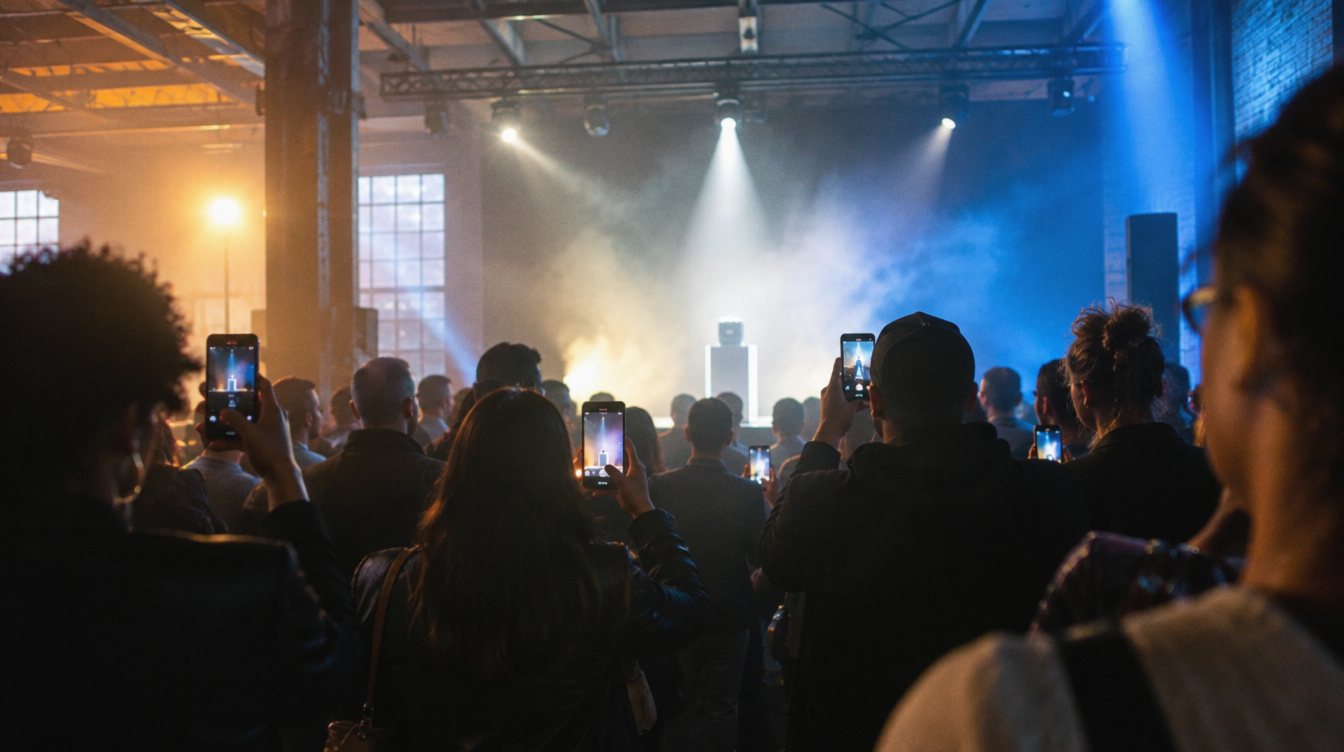
That second audience matters. A launch for 150 guests can reach far more people through the photos, clips and stream that come out of it. Plan for capture from the start, not as an add-on.
Plan backward from the reveal
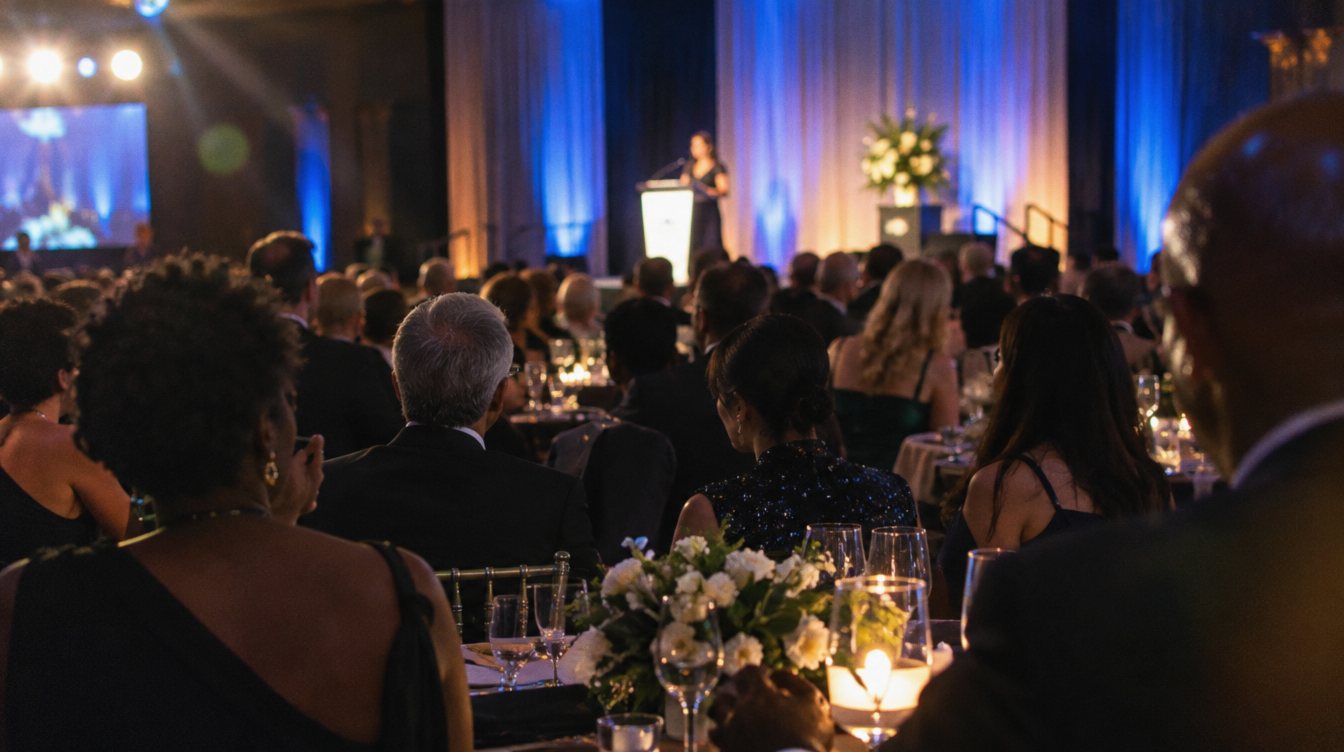
Write out the reveal second by second before you choose a venue layout. What is the room doing when the product appears? Lights dim, a video plays, music builds, a curtain drops or a spotlight finds the product on a plinth. Who speaks, for how long, and what do they say in the first sentence?
Then work backward. The reveal needs a stage sightline from every seat, a screen big enough to read from the back, sound that hits hard but clean, and lighting that can change the room in one cue. Those requirements shape your venue choice and floor plan, not the other way around.
Script the reveal before you pick the floor plan. The room should serve the moment, not the other way around.
A planning timeline that works
- 10 to 12 weeks out: goal, budget, date and venue
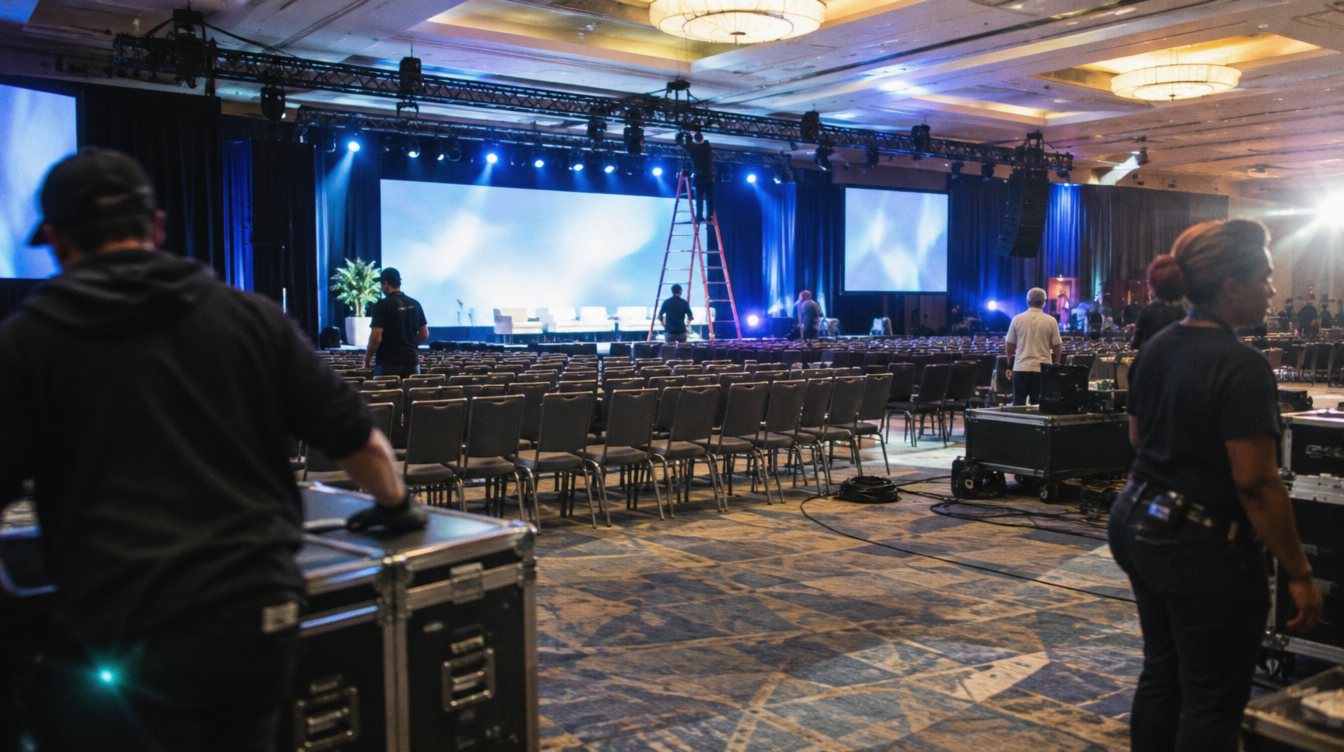
Confirm the date does not clash with industry events your guests attend. Tour venues with the reveal in mind: ceiling height, power, load-in access and whether the room can go dark.
- 8 weeks out: guest list and production partners
Send save the dates. Book the production team with a draft run of show so they can quote accurately.
- 6 weeks out: reveal content
Commission the launch video, slides and graphics. These take longer than anyone expects, and the AV plan depends on their format.
- 3 weeks out: final run of show
Lock every segment, cue and speaker. Share it with the venue, catering and every vendor. Send invitations with a clear arrival time.
- 1 week out: content delivered
Final video files, slides and music in one folder. Run them on the actual playback system if you can.
- Event day: technical rehearsal
Run the reveal at least twice with every cue: lights, sound, video, speaker and any physical reveal. Then run it again.
Our corporate event timeline guide goes deeper on the months before.
Production: what the reveal actually needs
Screens
Launch videos are made to be seen big. A bright projector on a large screen works in most rooms that can be dimmed. In bright rooms, or for a premium brand look, an LED wall is the stronger choice. Our LED wall vs projector guide compares the two.
Sound
A launch video with a heavy music bed needs subwoofers and enough power to feel it, while the presenter after it needs crisp speech. That is a full sound system with an engineer, not a small presentation setup. Count microphones for every presenter, plus a spare.
Lighting
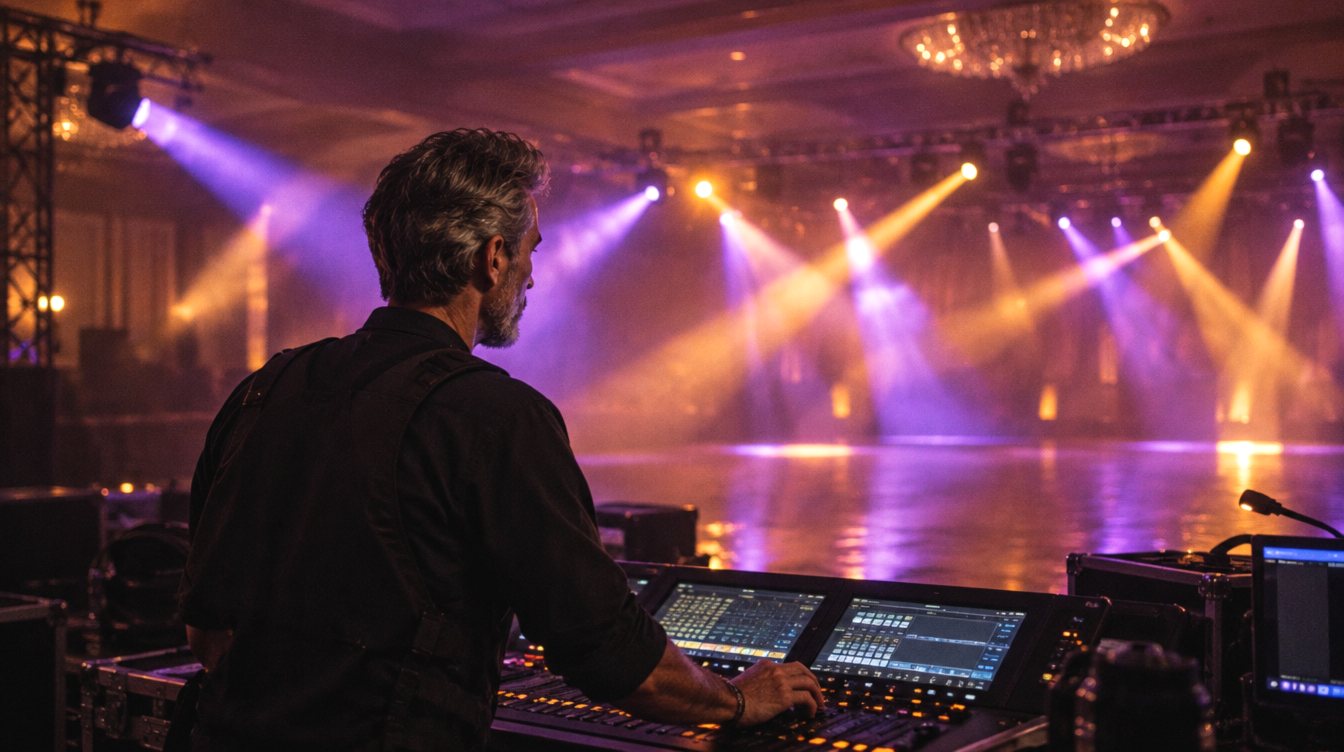
The reveal is mostly a lighting cue. Moving heads and washes run from a lighting controller can take the room from mingling to darkness to a single spotlight on the product. Uplighting in brand colors carries the look through the rest of the night.
Staging
A raised stage gives sightlines. Drape behind it hides doors and gear and gives cameras a clean background. If the product is physical, plan exactly where it sits, how it is covered and who uncovers it.
Keep a backup for the reveal video on a second laptop, cued and ready. If anything is going to fail on launch night, it will be the one file you did not duplicate.
Capture: make the launch last
The photos and video from your launch are marketing assets for months. Plan them as carefully as the event:
- A photographer briefed on the reveal moment, key guests and product shots
- Video coverage for a short recap film for social and sales
- A livestream if press, partners or customers cannot attend in person
- A clean product display area with good light for guests' own photos and posts
- A roaming photo or video booth so guests leave with branded content to share
- A plan for who posts what, and when, on the night
If you are streaming, read our hybrid event and livestreaming guide early, because it changes lighting and camera positions.
What a launch event can cost
Production for a launch is built from line items. From our rate card (4-hour starting prices), a mid-size launch might include:
| Line item | Starting price |
|---|---|
| Full event sound, up to 400 guests | $4,995 |
| Stage and dance floor lighting | $1,495 |
| Large projection, 7,500 lumens | $1,495 |
| Uplighting, 16 lights at $65 | $1,040 |
| Videography and recap film | $2,495 |
| Event photography | $1,295 |
| Multi-camera livestream | $3,495 |
A smaller launch for 100 guests might use presentation sound at $1,695, a single 10 ft screen at $895 and skip the stream. We quote every corporate event line by line, with setup and strike included within 75 miles of Los Angeles. You can start on our quote form.
After the event
The launch is not over when the lights come up. Send guests a thank you with a link to photos and the recap within a few days, while the excitement is fresh. Share the recording with anyone who missed it. And debrief with your team: what landed, what ran long, and what you would change for the next launch.
Frequently asked questions
How long should a product launch event be?
Most run 2 to 4 hours. The formal program, including the reveal, usually lasts 20 to 45 minutes, with time for mingling, demos and photos before and after.
Should the reveal happen early or late in the event?
Usually after guests have arrived and settled, but before energy drops. Around 45 to 60 minutes after doors is a common sweet spot, leaving time afterward for hands-on demos.
Do we need a livestream?
If press, investors, remote staff or customers cannot attend, a stream extends the launch to them. If everyone who matters is in the room, a recap video and good photos may be enough.
Can the launch happen at our office?
Yes, if the space can hold the guests, go dark for the reveal and supply enough power. Check load-in access and building rules for after-hours events early.